June 16, 2026
UK Workers Want Robots in the Workplace for Heavy Lifting, Not Caregiving, Hexagon Study Finds
A new study from Hexagon offers a consistent view of where people want robots in the workplace, and where they clearly do not.
Support for robotics is highest in warehouses and factories, where people favour robots for heavy lifting, hazard monitoring, and other practical tasks. But for roles that demand empathy and accountability, people are decisive in their preference for keeping humans in post.
The Hexagon Robot Generation study surveyed 9,000 adults and 9,000 children (aged 8–18) across nine countries including the UK, with fieldwork carried out by Vitreous World in late 2025. It provides a clear picture of where early robotics adoption could work best from the perspective of human acceptance.
Robotics adoption has generally been slower and more fragmented than the rapid growth of AI software. High upfront costs and the unsolved challenge of autonomy in real-world environments are among the factors holding it back.
The study adds another factor to that list: workforce trust, which matters just as much as the technical and financial hurdles. For HR and EX leaders, this is the issue to watch. Where trust in robots is earned, and where it is lost, will shape how successfully any organisation brings them into the workplace.
Where People Accept Robots in the Workplace
In the UK, adults leaned towards robots for work that is physical, repetitive, or hazardous. Over half (56%) would prefer a robot for lifting and transporting heavy items, 38% for carrying and delivering, and 34% for monitoring hazards. UK children are more open still, at 64% for heavy lifting and 55% for carrying and delivering.
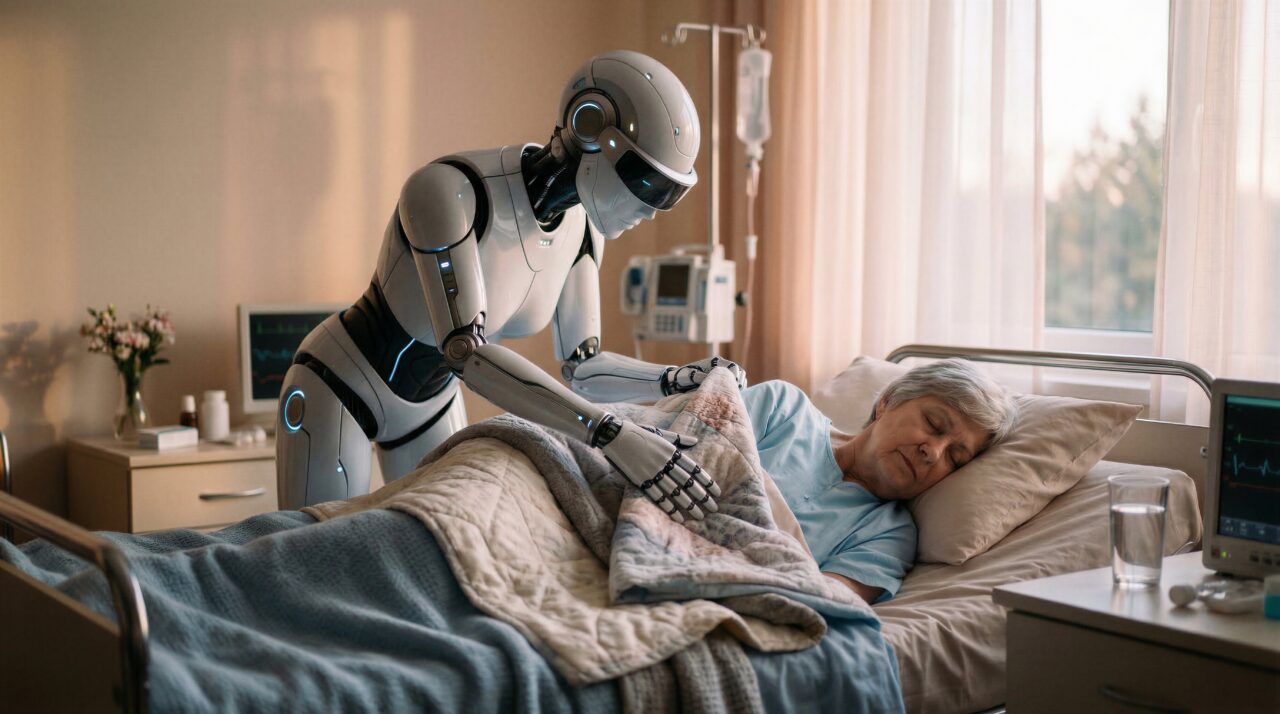
Both groups draw the line at caregiving. Some 82% of UK adults and 79% of UK children want a human to care for the sick, elderly, or children, while just 5% and 8% respectively would choose a robot. That is the weakest support for a robot across every task the study measured.
Location shapes the response too. UK adults are more comfortable with robots in factories and warehouses (53%) than in hospitals and clinics (34%) or classrooms (30%). The pattern points to a clear unease about placing robots where vulnerable people could be at risk, and where relational skills and emotional intelligence are vital.
“People are telling us exactly where robots belong and where they don’t, and their instincts are remarkably consistent across markets,” said Burkhard Boeckem, Chief Technology Officer at Hexagon.
“Industrial environments are where the tasks for robots are the most defined, the safety cases are mature, and governance is in public view. That is where people feel most comfortable working alongside humanoids, and it’s precisely where our technologies already operate. This data confirms that the path to adoption runs through industry, not around it.”
Robot Colleagues: A Generational Divide
The data also reveals a generational divide in how far people would take the relationship. Only 12% of UK adults think robots should be considered full colleagues, and just 9% would want one in charge. UK children are nearly twice as likely to see a robot as a full colleague, pointing to a shift already under way.
Adult sentiment is cautious, with 46% saying a robot colleague would be frightening, compared with the 28% who find the prospect exciting. Preference also tilts towards machine-like robots (27%) over human-like ones (14%), suggesting that for now trust is built through function rather than appearance.
From Foe to Trusted Collaborator?
For now, the UK public overwhelmingly agrees that robots should be kept away from caring roles. But that position may soften as people have more contact with the technology.
“As robots and AI consistently handle administrative tasks, the brain’s implicit calculations of connection, risk, and uncertainty may gradually shift their threat assessment from foe to trusted collaborator,” said Sandra Thompson, Director at Ei Evolution.
The expected shift tracks with how exposure varies between countries. Only 30% of UK adults have encountered a robot in real life, and just 32% would be comfortable with one in the home. In China, where 75% of adults have encountered robots, 63% would welcome one at home. Exposure alone is unlikely to explain that gap; consistent accuracy and successful task completion matter too.
“It’s the same incremental recalibration that builds trust between people, through repeated, predictable, error-free performance,” Thompson notes. “As trust accumulates, we may grow willing to hand over more sensitive, human-related work, not because the robot changed, but because our internal risk calculus did.”
Whether that trust ever extends to humanoid carers in nursing homes is too early to call. As Thompson puts it, “a deeper question remains.” She asks: “Does competence in administrative tasks really transfer to the messier, relational work of caring for human minds, or are these two domains less connected than the gradual-trust model assumes?”
Related article: Workplace Robots Aren’t the Problem, Poor Leadership Is