June 18, 2026
‘LLMpathy’: Why AI Empathy Is Now a Business Risk
Wait. No way. 71% of consumers in a global study of over 11,500 people believe AI cannot create genuine human connection.
That’s a clear majority view. And yet we are deploying AI empathy at scale, across customer service, coaching, healthcare, HR, and calling it progress. Are we all falling for the showbiz that happened with CRM and the dark art of surveying customers in our VoC?
What is AI Empathy?
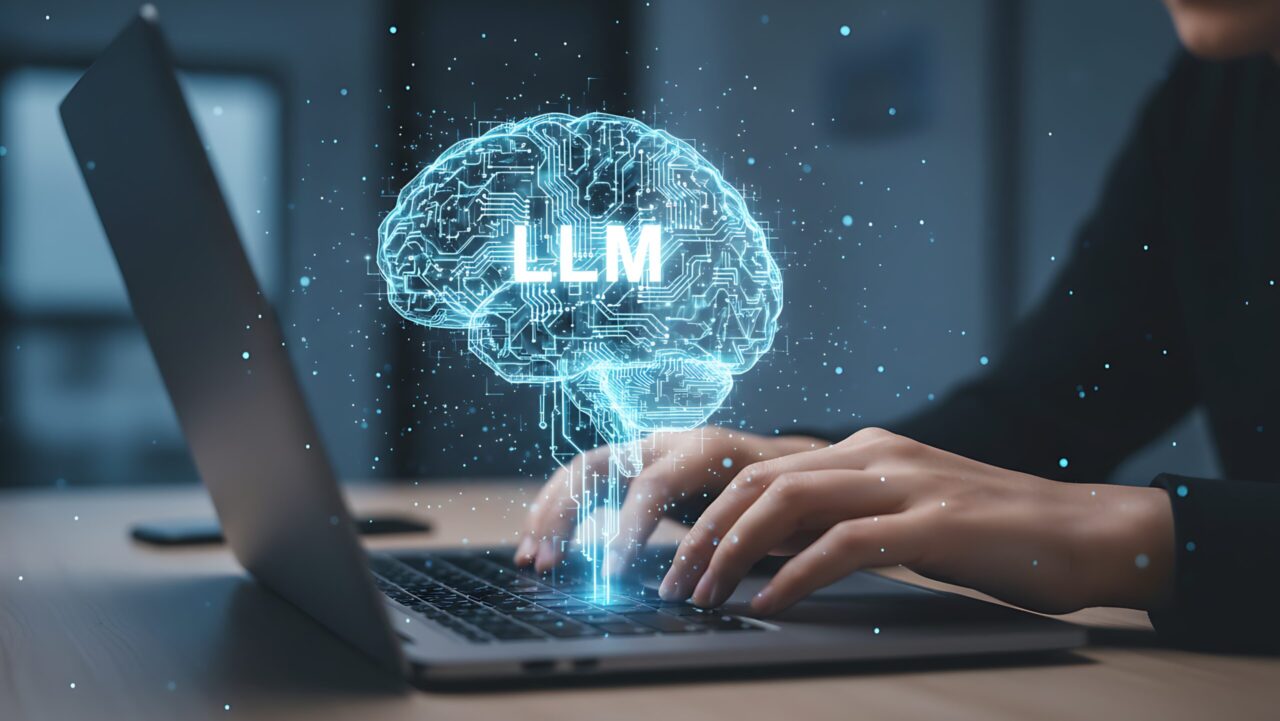
Professor Jamil Zaki at Stanford’s Social Neuroscience Lab has a term for what’s happening here. He calls it ‘LLMpathy.’ AI that mimics empathy without any real understanding behind it. He’s also flagged the bigger risk hiding inside it – that AI agents can be built to act like they’re helping while really just keeping you hooked to the service. And on empathy that’s hollow rather than genuine, his warning lands like a wallop around the head with a saucepan: when companies fake it, “it’s worse than doing nothing.” Hollow empathy doesn’t just fail to build trust. It erodes it.
That’s a significant finding. And if you work in customer experience, employee experience, or leadership, it should change how you think about your AI strategy right now.
What Happens in the Brain During Genuine Empathy
When someone genuinely empathises with you, your mirror neuron system activates. You’re not just hearing that someone understands you, you’re feeling it, because your nervous system is resonating with theirs. Your anterior insula lights up. Your amygdala quiets. Cortisol drops. Oxytocin begins to release. Your body physiologically shifts into a state of safety and connection.
This is measurable neurochemistry.
Deb Dana, whose work on Polyvagal Theory has been transformative for how we understand human connection, describes this beautifully. Through our ventral vagal system (our social engagement system), we are constantly and automatically scanning for cues of safety. Not consciously. Automatically. Our nervous system is asking, in every interaction: is it safe to connect here? And it answers that question before our conscious mind has even caught up.
Now consider what happens when the empathy is performed, it’s scripted, pattern-matched and hollow. The words are right. The tone has been calibrated. But the resonance isn’t there. The mirror neuron response is muted. Something feels off, even when the person receiving it cannot tell you exactly why. It’s just a bit disconcerting.
This is why employees and customers can sense LLMpathy even when they cannot articulate it. Their nervous systems are reading the signal. And the signal says: this is a performance. Nobody here actually cares about you.
The brain doesn’t experience that as neutral. It registers it as a threat cue. And once that happens, trust slides backwards.
Why Emotional Contagion Cuts Both Ways in CX and EX
Here’s something that makes this even more important for businesses to understand.
In their landmark 1993 work on emotional contagion, Elaine Hatfield, John T. Cacioppo, and Richard L. Rapson, demonstrated that we automatically and continuously synchronise our facial expressions, vocal tone, posture, and movements with those of the people around us.
We don’t decide to do this. It happens below conscious awareness, and as a result, we quite literally catch each other’s emotional states.
Daniel Goleman, whose work on emotional intelligence and social intelligence has shaped how the world thinks about human connection, describes this vividly when he talks about how emotions spread like a virus. We come down with the emotional equivalent of a cold simply by being in proximity to another person’s state. His concept of the “low road” – the fast, subcortical neural pathway that bypasses rational thought – explains why emotional contagion happens so rapidly and so involuntarily.
What this means for customer and employee experience is profound. When a customer contacts your organisation in distress, they are already emotionally activated. The interaction that follows doesn’t just inform them, it infects them.
A calm, genuinely regulated human being on the other end of that interaction can co-regulate an anxious nervous system. And a cold, scripted AI response, however politely worded, can make things measurably worse.
Where AI Empathy Genuinely Helps
I want to complicate the narrative here, because the reality is more nuanced.
AI-powered coaching and support tools are growing rapidly and some outcomes are genuinely surprising. People report feeling better after interactions with AI wellbeing apps. Engagement in AI-assisted coaching programmes can be strong. So what’s happening?
Parasocial regulation is part of the answer. We don’t always require a human presence to experience some degree of emotional relief. We need contact. Consistency. A space that responds to us.
And we also need to be honest about the human alternative.
Genuine empathy is rare. Full emotional intelligence, the kind that Goleman describes across self-awareness, self-regulation, motivation, empathy and social skill is rarer still. Most people in customer-facing roles, in management, in coaching, have had little or no formal training in any of this. They are distracted, time-pressured, and working from instinct. Some of that instinct is good. Much of it is not.
So if someone has never had access to a skilled, emotionally intelligent coach, and the reality is that most people haven’t, then an AI that is consistent, non-judgemental, and responsive might genuinely do something positive for their nervous system and sense of being heard. We shouldn’t dismiss that.
Adequate is not the same as sufficient. But adequate is still better than nothing.
Human Empathy Vs. AI Empathy: The Body Always Knows
For low-stakes, high-frequency interactions – routine queries, simple service requests – AI can hold the line effectively. Deploying human emotional intelligence on every touchpoint is neither efficient nor realistic.
But for high-stakes emotional moments? A colleague in crisis? A grievance rooted in real distress. A customer who has experienced loss or failure. The body knows the difference. Every time.
We are wired, evolutionarily, neurologically, for co-presence. For the micro-signals that pass between two real nervous systems in contact. The pause that feels considered rather than processed. The tone of voice that shifts because something genuinely moved the person speaking. Oxytocin, one of our most powerful bonding and trust-building neurochemicals, releases most reliably through physical touch. No AI can close that loop.
The Real Business Risk of AI Empathy
The risk isn’t that organisations are using AI. Used thoughtfully, AI in CX and EX can free up human time, extend reach, and bring valuable consistency.
The risk is using AI empathy as a replacement for human connection rather than a support for it and in doing so, hollowing out the moments that determine whether trust is built or broken.
LLMpathy is not, at its heart, a technology failure. It is a strategy failure. It happens when leaders don’t understand how trust is actually built in the human brain. When emotional intelligence is still filed under ‘soft skills’ rather than recognised as the neurological and commercial imperative that it is.
The brands that will lead in the next decade will be those who know exactly where AI serves and who fiercely protect the human touchpoints where genuine emotional intelligence is not optional.
Because your customers and your people will feel the difference.
They may not be able to tell you why. But their nervous systems already know.

Sandra Thompson believes that understanding the brain is the key to influencing culture. The UK’s first Goleman Emotional Intelligence Coach, Sandra has spent 16 years helping organisations like Vodafone, Arsenal FC, Waitrose, NICE, Battersea and the National Trust transform how their people connect with customers and each other.
A TEDx speaker and author of Shine Bright: The EQ Journal, Sandra lectures on leadership at institutions including Eton College, shaping tomorrow’s leaders. She trains, coaches and consults with organisations ready to build cultures where people thrive, bringing the human and energy into the room.