
July 07, 2026
Revolut Scraps Remote-First Graduate Policy. Seven Experts Disagree on Whether That’s Good for Them
Revolut’s graduate return-to-office policy marks a clear reversal. From next year, graduate hires will need to be in the office at least three days a week, the company has confirmed, scrapping the ‘remote-first’ approach it once used to attract them.
Graduates could previously choose between home and office; now they cannot. The move puts Revolut alongside a wider retreat from the flexible-working policies that defined the pandemic years.
Some employers are framing a return to the office as good for graduates: better mentoring, faster learning, a stronger sense of belonging. Others see it as a hard-won benefit being withdrawn from the people with the least power to object.
So which is it? Does pulling graduates back into the office actually serve their development, or is flexibility being taken away from the people who were promised it?
What the Experts Told Us
We put this question to seven experts across organisational behaviour, people science, leadership development and early-careers research.
Their answers split in three directions: one contributor argues office time is a fair trade if employers cover the cost of it, another warns that mandates undo real progress on inclusion, and several argue that location was never really the issue.
Yes to Three Days RTO, But Employers Should Cover the Commute

Bruce Daisley, LinkedIn Top Voice on Work & Workplace Culture, 2x Sunday Times Bestseller, ex-tech firm VP
“Should new recruits be forced to spend three days in the office? My answer is a qualified yes. Most young starters need to live further from the office than previous generations had to, either at their parents’ home or in shared accommodation that is a long way away. My view is that firms should cover that travel cost in full as part of their request to graduates. It still requires sacrifice on the part of the new recruit, but they can at least frame it as part of their education. Three days still represents a flexible benefit that would have been unheard of a decade ago.”
A Backward Step for Diversity and Genuine Employee Care

Dr Alex Bristow, Senior Lecturer in Organisational Behaviour, The Open University
“Return-to-office mandates are a backward step that undoes some of the accidental good that came out of the Covid-19 pandemic.
“While the pandemic caused enormous suffering, it also brought a technological and cultural step change in workplace inclusion through flexible and remote working. This opened new possibilities for people whose needs had previously been less considered by employers, including those with caring responsibilities, disabled employees, neurodivergent or introverted employees, and those living further from major corporate hubs.”
“The backlash we are now seeing is too often driven by leaders panicking over a perceived loss of control, rather than by genuine care for employees. Graduate development matters, of course. But mandating office attendance ignores the fact that graduates are diverse too, and that some will be excluded by the very arrangements presented as supporting them. Genuine care requires sensitivity and responsiveness to wide-ranging needs of diverse employees rather than blanket requirements imposed on all.”
Presence alone doesn’t create early careers learning

Perry Timms, Founder and Chief Energy Officer of People and Transformational HR
“Though I’ve worked remotely for almost 30 years, I’m not biased toward remote work; I support designed choices to work from anywhere.”
“The question isn’t whether graduates should be in the office more often. It’s whether organisations have become intentional enough about how early careers are developed. Presence alone doesn’t create learning. Equally, permanent remote work can deprive people of the informal coaching, observation and social learning that accelerate professional growth. The real issue isn’t location; it’s developmental design.”
“I’ve worked with organisations where new starters flourished because teams deliberately created “apprenticeships in practice”. Shadowing client meetings, listening in to difficult conversations, receiving immediate feedback and building trusted relationships as part of the job. Those experiences happened both in person and virtually because leaders treated development as a system, not a place.”
“Rather than mandating attendance for its own sake, People and Employee Experience leaders should define what new starters/graduates need to experience in their first 12–18 months, then design the working rhythm around those outcomes.”
Meaningful Office Time Requires Deliberate Design, Not Mandates

Dr Arne Sjöström, Regional Director People Science EMEA, Culture Amp
“Simply bringing graduates back to the office does not equal development. Remote work is often a scapegoat for wider organisational failures, whereas true engagement stems from supportive leadership, clear growth opportunities, and quality decision-making. That said, office time serves a purpose. For example, 2025 data shows employees value it for socialising (43.1%), collaboration (43%), and mentoring (28.1%).
“Culture Amp’s broader research also suggests office workers can find it easier to access information and navigate systems. This shapes our own CampUs graduate program, where development is created deliberately through team integration, coaching, and cohort learning from day one.”
“Ultimately, it’s not about mandating presence and labelling it development. Instead, it’s about deliberately designing for development by using purposeful in-person moments for onboarding, mentoring, and project kick-offs, backed by strong manager check-ins and visible growth pathways.”
Location Isn’t the Real Question — Mentorship Is
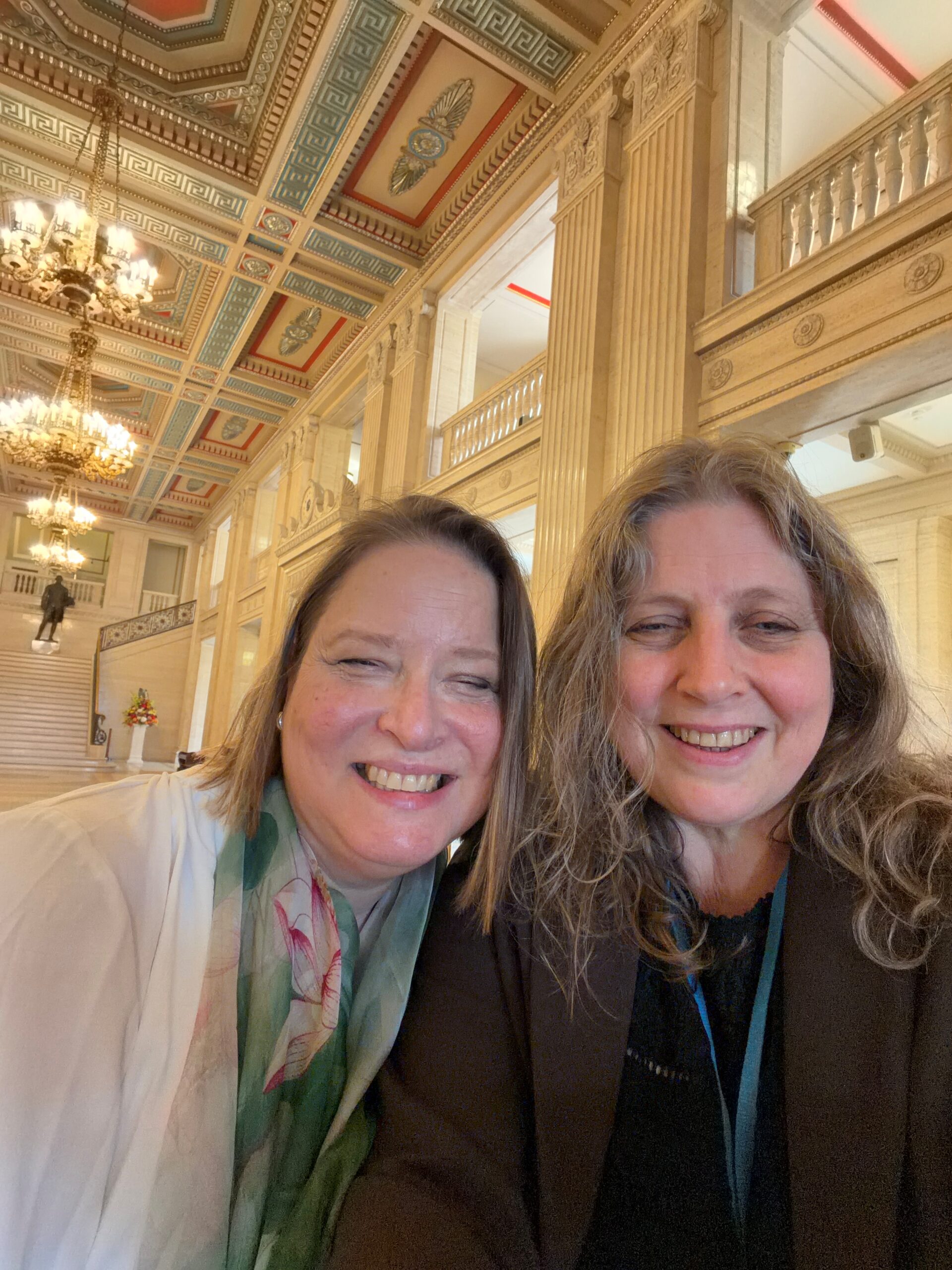
Fran Myers and Kristen Reid from Work-Based Learning and Skills for the Future research cluster at the Open University Business School
“Actually, that’s not the question we should be asking. Whatever the industry, work readiness is the primary challenge for young people to be successful right now. So, where young people work is less important for development and fulfilment than the amount of employer support they receive in transitioning into the world of work. In our research investigating formalised learning in the workplace, such as apprenticeships, we’ve found that the key difference for success is mentorship.”
“Quality time with supportive and knowledgeable colleagues, whether face-to-face or online, is vital for succeeding in your first role – and indeed ‘stepping up’ to the next one.”
“What does quality time look like? Sometimes that support doesn’t even relate to the job. One mentor emphasised that basic hygiene factors, such as who’s allowed to use the microwave, is just as important as advice on work readiness skills – negotiation, giving and receiving feedback and how to answer the phone. It’s effective pastoral care that makes a difference.”
Graduate Learning Can be Accelerated through Intentional Proximity

Deborah Hartung, leadership development consultant, Kind
”Graduate employees aren’t just learning technical skills; they’re learning how organisations work, how influence happens, how to navigate ambiguity, build relationships, receive feedback and develop professional judgement. Some of that can absolutely happen remotely, but much of it is accelerated through intentional proximity.”
“Rather than debating how many days graduates should spend in the office, people leaders should ask a better question: What learning experiences do we want them to have, and where are those experiences best delivered? If the answer is in person, be intentional about why. If it’s remote, design for it just as deliberately. Flexibility shouldn’t be treated as a perk to be granted or withdrawn; it should be a tool that enables learning, performance and belonging.”
Does returning to the office help graduate development?
The Verdict: The strongest consensus is that location alone doesn’t build careers. Development depends on how deliberately organisations design mentoring, feedback, and coaching into a graduate’s first year, not on where that graduate happens to sit.
Read more:
Entry-Level Jobs Now Demand Senior Skills: An EX Playbook for the AI Era
The NEET Crisis: Five Experts on Preventing a ‘Lost Generation’