
July 06, 2026
Everyone is selling AI. Few are selling certainty
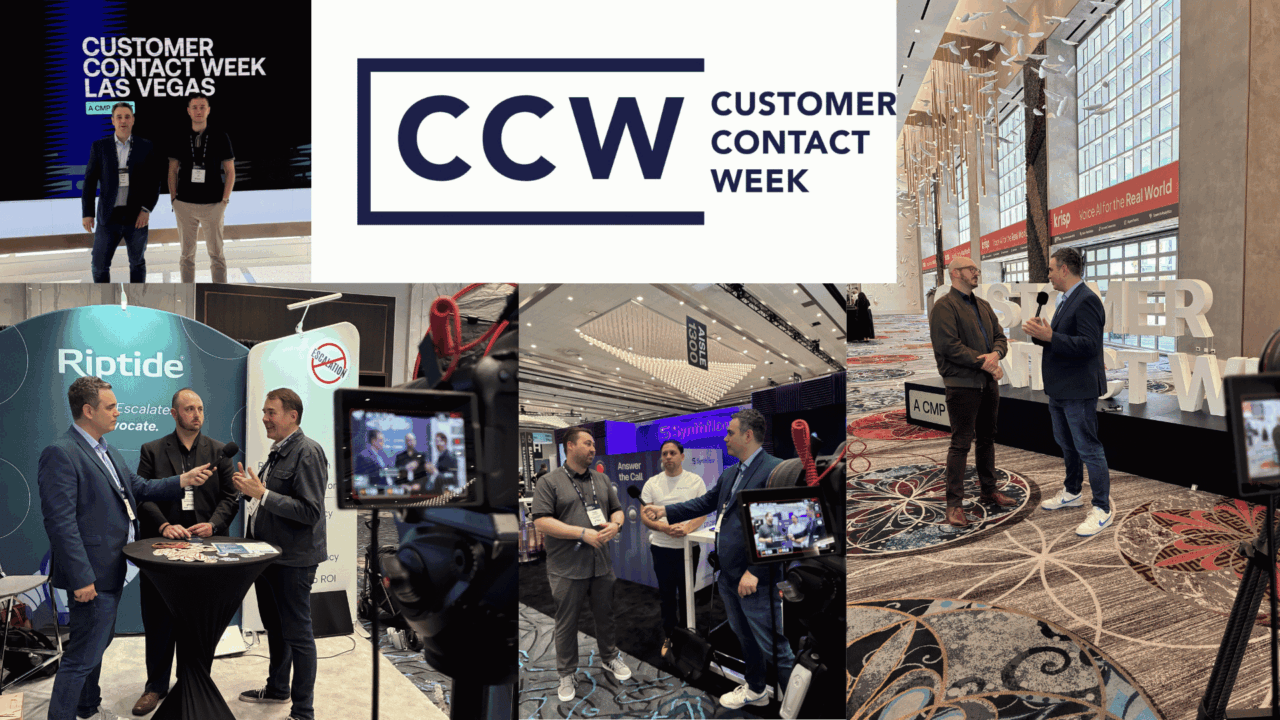
Customer Contact Week 2026 was full of confidence. The private conversations were full of doubt. I spent the week talking to vendors, BPOs and industry participants about what comes next for CX.
Walk any aisle of the Las Vegas Convention Center during CCW and the industry’s conviction was unmistakable. Autonomous agents promised to resolve enquiries without human intervention. Copilots promised to make advisers more productive. Product launches converged on orchestration, observability and generative intelligence, and the marketing converged on a single proposition: customer service is becoming faster, cheaper and smarter because AI has finally reached enterprise scale.
Every stand told a version of that story. The interesting part was that many of the executives behind those stands were quietly telling a different one.
Across thirty-plus interviews with software vendors, outsourcers, consultants and enterprise leaders, the gap between what was projected from the exhibition floor and what was said once the demonstration ended became difficult to ignore. Nobody doubts that AI will reshape customer experience. That argument is over. The questions occupying senior executives are harder ones: how organisations generate a return, what the technology costs to operate at scale, why apparently successful deployments stall, and whether businesses are changing quickly enough to capture the value on offer.
None of those questions fit neatly into a product launch. All of them surfaced repeatedly. CCW 2026 felt less like the industry’s celebration of AI than the moment it began confronting the consequences of adopting it.
Capability is no longer the differentiator
Two years ago, generative AI conversations were dominated by possibility. Vendors competed to show what large language models could do. Buyers tried to work out where the technology might fit. Today, few people need convincing that AI can understand intent, retrieve information or automate routine interactions. Those capabilities are assumed.
Boards have moved on with them. Customer experience leaders are now asked to justify AI investment against the same commercial criteria applied to any other technology programme. Does it reduce cost? Does it improve outcomes? Does it lift productivity without damaging service quality? Do the returns survive the end of the implementation honeymoon?
Those questions proved much harder to answer than whether an agent could hold a convincing conversation.
Chris Morrissey, who leads Zoom’s customer experience business, thinks the market itself has changed shape. Five years ago vendors competed to call themselves cloud-first. Before that it was analytics. Today almost every serious software company describes itself as AI-first, a phrase now so common that it tells buyers nothing. AI has moved from differentiator to expectation. The challenge is demonstrating why one implementation delivers better business outcomes than another.
Jeff Janzen, chief executive of Laivly, has watched that shift across successive CCW events. He remembers when a handful of exhibitors demonstrated AI and drew crowds because the technology still felt experimental. Now AI is the price of admission. Buyers arrive assuming every platform automates conversations, summarises interactions and supports advisers with generative tools. The novelty has gone, and with it a large part of the industry’s differentiation.
The launches reflected as much. Zoom introduced outcome-based pricing alongside new tools for building and testing agents. Parloa expanded its platform with Navigator and Lens, both aimed at observability and continuous optimisation. Sanas showed speech enhancement, translation and speech intelligence products it says were proven in large-scale deployments before public release. Across the floor, demonstrations dwelt on reliability, governance, coaching, quality management and integration rather than on proving that AI could answer a question.
The industry has started competing on execution rather than aspiration.
The technology is rarely the constraint
Return on investment surfaced in almost every private conversation. Not because organisations have stopped believing in AI, but because they have started asking what success is supposed to look like.
Molly Moore, president and chief operating officer at Liveops, argues that most organisations misunderstand where AI creates value. Businesses expect new technology to compensate for years of accumulated operational complexity. In practice, it exposes that complexity faster. Customer information scattered across systems, inconsistent operating procedures and fragmented knowledge remain manageable while experienced advisers paper over them. Attempt to automate the same journey and the weaknesses become impossible to hide. AI takes the blame when returns fail to materialise. Often it is simply revealing problems that predate it.
Eric Guarro, president of ibex CX, reached the same conclusion through a phrase that predates generative AI by decades.
“Garbage in, garbage out.”
Variations of that observation ran through the week. Whether the conversation involved software providers, outsourcers or consultants, there was broad agreement that foundation models are no longer the principal constraint. The limiting factor sits inside the organisation.
Infobip’s latest CX Maturity Report, presented during the week by Ante Pamuković, supports the point. Adoption of agentic AI continues to accelerate, but organisations remain clustered around straightforward interactions. Frequently asked questions, routine account enquiries and basic support requests are increasingly automated. Complex journeys are proving far more resistant. Only 15 per cent of organisations surveyed had successfully automated returns and refunds, despite those being among the most expensive and operationally demanding journeys in customer service.
That statistic says more about organisations than it does about AI.
Returns and refunds rarely involve one application, one department or one process. They cut across finance, logistics, CRM, policy management and legacy systems assembled over decades. AI can give the customer a better conversational interface. It still depends on accurate information moving between systems that were never designed to talk to each other.
The team at Provalus described deploying an agent for a prospective customer while privately expecting it to fail. The point was not to undermine confidence in the technology but to show the client something it had not yet recognised. Its data was incomplete, scattered and lacking the structure AI needs to make reliable decisions. The deployment struggled, as anticipated. What happened next mattered more. The discussion moved immediately away from AI and towards data quality, governance and process redesign. The technology had not failed. It had made an existing weakness impossible to ignore.
Businesses continue to treat AI as a technology implementation. It is behaving like a business transformation programme. Software can be deployed quickly. Re-engineering processes, improving data quality and aligning an organisation around new ways of working takes considerably longer, and it is the point at which ambitious programmes lose momentum.
Latané Conant, chief marketing officer at Parloa, calls the resulting condition “pilot purgatory”: the stage between a successful proof of concept and meaningful enterprise adoption. It is an apt description. There is no shortage of impressive pilots. CCW was full of them. The difficulty starts when a business tries to redesign its operations around AI rather than bolting AI onto the operations it already has.
The economics remain opaque
An agent can resolve an enquiry. Whether that interaction costs less than the alternative, improves the experience and continues to do both once millions of conversations flow through the system is a different question. It is the one finance directors are now asking.
Traditional enterprise software lends itself to predictable budgeting. Licences, implementation, support. AI does not behave that way. Costs move with usage, model selection and interaction complexity. The more successful a deployment becomes, the harder its running cost is to forecast.
Anant Singh, chief executive of Sanas, was refreshingly direct about it. Organisations underestimate the cumulative effect of consumption pricing because each interaction looks cheap. Every prompt, every response and every refinement consumes tokens. Those costs stay invisible until they are multiplied across thousands of advisers and millions of conversations. At that scale AI starts to resemble an operational utility rather than a software platform, with costs that rise and fall with demand.
Singh believes the industry is moving beyond software-as-a-service towards what he calls “agents as a service”. Whether the phrase sticks matters less than the idea behind it. Organisations are contemplating large populations of digital workers running alongside human employees, each consuming compute, each requiring governance, each contributing to an operating cost that nobody can yet model with precision. The technology is advancing faster than the financial frameworks used to evaluate it.
LeGrand Bonnet, senior vice president of global operations at CBE Companies, reduced the whole problem to one question.
“Is a token actually cheaper than offshore labour?”
It sounds simple. It undermines an assumption that has carried much of the industry’s AI narrative. Automation is routinely presented as a route to lower operating cost, yet comparing a language model with a human adviser is not a like-for-like exercise. People do more than process transactions. They interpret ambiguity, negotiate, reassure anxious customers and handle situations that sit outside any workflow. AI excels elsewhere. Costing one against the other demands a more sophisticated understanding of customer service than headline productivity figures allow.
Which may explain why one of the week’s more significant announcements concerned commercial models rather than technology.
Zoom’s outcome-based pricing departs from the way contact centre software has traditionally been bought. Rather than charging on interaction volumes or licences alone, the company is attempting to align price with successful customer outcomes. It concedes something the market has quietly understood for years: activity and value are not the same thing.
Morrissey was careful to separate containment from resolution, two metrics frequently treated as though they describe the same event. A customer prevented from reaching a human adviser is not necessarily a satisfied one. A conversation concluded by AI is worth little if the customer has to make contact again an hour later. Measure automation in isolation and you reward behaviour that reduces workload while increasing frustration.
Execution is the new differentiator
Judge CCW by the volume of announcements and 2026 was another milestone. New agents, new orchestration platforms, new pricing models, increasingly sophisticated tools for quality management and coaching. Roadmaps stretched further towards autonomous service, and demonstrations became progressively harder to tell apart.
What lingered was the sense that the industry has entered a different phase. Whether AI belongs in customer experience is settled. What remains is less glamorous: integrating it into businesses that were never designed for it, justifying the investment in commercial rather than technological terms, and persuading sceptical boards that the returns survive contact with the real operating environment.
It explains why so many conversations arrived at the same place regardless of where they started. Discussions that opened with autonomous agents ended with governance. Demonstrations of conversational AI drifted towards data quality. Product launches turned into conversations about organisational change. The further executives moved from what their technology could do, the more time they spent on what their customers still find difficult.
Customer experience has always been an operational discipline before a technological one. Organisations succeed because they understand customers, simplify journeys, remove effort and give employees the means to fix problems. AI has expanded what is technically possible. It has not suspended any of that. A poor process executed by AI is still a poor process. Fragmented data does not improve because a language model reads it. Automating inconsistency delivers inconsistent experiences faster.
That was one of the few points on which everybody agreed.
It also suggests the next phase of competition will look different from the last. Capability is becoming universal. Every credible platform has AI. Every roadmap includes autonomous agents. Every executive presentation contains broadly the same ambition. Advantage has to migrate somewhere, and it is migrating towards execution.
The organisations that emerge strongest are unlikely to be those making the boldest claims. They are more likely to be the ones capable of integrating AI into coherent operating models supported by reliable data, sensible governance and journeys designed around outcomes rather than technology. That is a less dramatic story than the arrival of generative AI. It is the one boards, investors and customers will care about.
Morrissey returned to it several times, almost in passing. Zoom is not trying to become an AI company. It is trying to become a better customer experience company that happens to use AI extensively.
The remark sounds obvious until you set it against the hundreds of marketing messages competing for attention on the exhibition floor. Somewhere along the way, much of the industry started talking as though AI were the objective rather than the means of reaching it.
Enthusiasm has not faded. There was no evidence of that. The market has simply become more demanding. Buyers ask tougher questions. Boards want clearer commercial justification. Customers remain indifferent to the technology and interested only in whether their problem is solved quickly, accurately and without effort.
AI has won the argument about whether it belongs in customer experience. The argument now is far more complex and one we will be following closely here at CXM.