July 22, 2026
Workers Spend 6.4 Hours a Week Botsitting. What’s the Employee Experience Cost?
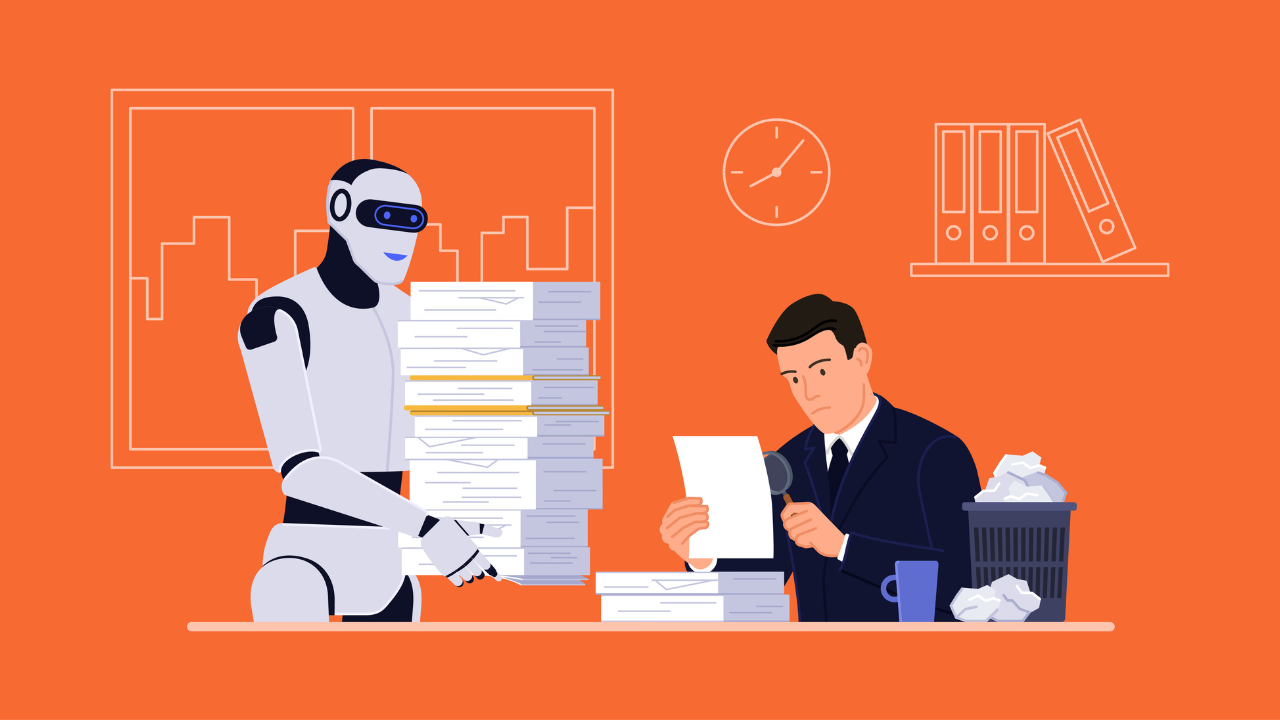
AI was meant to give us back some time. Instead, botsitting and botshitting at work are consuming 6.4 hours of it every week, per person.
Unless you’ve been hiding under a rock since the dawn of gen AI, you’ll be well aware of AI workslop: output that looks polished and seems legitimate at a glance, but actually requires a human to fix it.
The problem is so pervasive, and wastes so much time, that it’s fundamentally changing people’s roles from experts (or aspiring-to-be experts) in their fields to ‘botsitters’. A 2026 survey of 6,000 digital workers across the US, UK, and Australia put a number on it. Employees waste an average of 6.4 hours every week on the frustrating tasks of feeding missing context and debugging AI errors.
This botsitting labour is not only invisible and unfulfilling, it’s also exhausting. For every 10% more time workers spend feeding AI context, they are 25% more likely to report feeling worn out by it.
The situation is so severe that 69% of workers now admit to ‘botshitting’ – delivering AI-generated work they do not fully understand, have not evaluated, and cannot defend if questioned. It’s a cycle that leads to more AI workslop falling through the net, which in turn erodes trust among colleagues and customers alike.
It’s also a catalyst for employee disengagement and flight risk, with frequent botsitters 73% more likely to be actively hunting for another job.
The focus on workslop has in large part been about the resulting deluge of poor quality output. But from an employee experience perspective, the quality of doing the work itself needs equal consideration.
How people view their work – the agency they have, the skills they’re honing, the impact they’re personally making – all shapes their broader experience at work, and the commitment they have for their company.
What Are Botsitting and Botshitting at Work?
Botsitting is the human labour required to make an AI’s output usable. It covers feeding the model context, evaluating what comes back, fixing errors, catching hallucinations, and switching between tools to compare outputs. A small share is productive, such as validating high-stakes outputs, but most of it is grunt work.
Botshitting, as the study terms it, is the escalation. When people tire of the time lost to checking and correcting, they start skipping validation steps and ship work they have had no real oversight of.
Why Botsitting Turns Into Botshitting
Laziness is the easy explanation, and the wrong one. It overlooks three things: the signals leaders send, the cognitive demands of constant context switching, and a push for efficiency that treats human judgement as friction.
The Signals Leaders Send
Where ‘AI-first’ becomes embedded in company values, the message employees hear is to use the tools as much as possible and get more work out, even where quality suffers. Human judgement slows the process down, so it is quietly devalued.
The problem intensifies when leaders want decisions checked by AI, as CX and EX Strategist Danny Seals argues.
“Once a CEO says – run it through AI, the message isn’t really about the tool. It’s a risk signal. A decision backed by AI needs no justification, a decision that overrides it does, and at some point defending your own judgment costs more effort and carries more risk than just going with the machine.”
His point is that botshitting is not laziness. It is employees correctly reading a signal from the top that human thinking has become the expensive option, when a cheaper path is available.
AI Fatigue and Context Switching
Tool sprawl compounds the pressure. The same research found that 77% of AI users move between multiple tools every week, and 33% between four or more. Alongside jumping between tools, they are jumping between tasks: soundboarding ideas, checking accuracy, and rewriting prompts to improve the next output.
Danny Wareham, organisational psychologist and Culture and Engagement Director at Firgun, points to what researchers call a ‘switching cost’ – the additional mental effort and reduced efficiency that each transition carries. Botsitting makes those transitions relentless.
Evaluation is the heaviest part of the cycle. When you assess something you did not create, you inherit responsibility for it without having experienced the reasoning that produced it. When that constant supervision becomes too demanding, Wareham says, “botshitting becomes a natural side effect.” It is a pattern that compounds the AI fatigue already reshaping workplace burnout.
The Cost of Losing Agency When Botsitting
Viewed through an employee experience lens, the gradual loss of human agency is the deeper concern.
Cognitive offloading is normal and universal. We use calendars rather than remember appointments, and phones rather than memorise numbers. What matters, Wareham argues, is what gets offloaded. Handing over recall is one thing; handing over judgement, evaluation, and critical thinking means outsourcing expertise itself.
Expertise develops through friction. Wareham points to what psychologists call ‘desirable difficulties’: challenges that slow learning in the moment but produce deeper understanding over time. “If AI removes too many of those productive struggles, it may improve today’s performance at the expense of tomorrow’s expertise.”
In the short term the trade looks favourable, because work gets done faster and feels easier. Over time, “their role subtly shifts from creating solutions to evaluating them,” Wareham says. Confidence attaches itself to the tool rather than the person. “Faced with a complex or ambiguous problem, the instinct becomes not ‘How would I approach this?’ but ‘What does the AI think?'”
He identifies three casualties for organisations:
- Expertise becomes harder to see. Managers have traditionally spotted talent by watching how people reason, challenge assumptions, and work through uncertainty. When AI contributes substantially to everyone’s output, those signals blur.
- Organisations become less adaptable. AI performs well on familiar problems and well-trodden paths, but crises, ethical judgement, and genuinely novel opportunities need people with real expertise and experience behind them.
- Resilience erodes. Employees build capability by wrestling with difficult decisions, experimenting, and failing – precisely the skills organisations need in uncertain conditions, which are the conditions most are operating in.
Agency, on Wareham’s account, is not something people possess. It is maintained through continual use, and it weakens when the opportunities to exercise it become less frequent.
Botshitting and Trust
As AI enters more of the work, colleagues begin asking a question they never used to. How much of this belongs to the person, and how much to the tool?
“Trust between colleagues depends partly on predictability. We trust people when we understand how they operate,” Wareham says. Where organisations are unclear about how AI can and cannot be used, employees fill the gap with their own assumptions about what is acceptable.
Psychological safety is part of the picture. If people expect to be judged for admitting AI use – even where they applied genuine human judgement – they will not feel safe being transparent about it.
Seals sees the same dynamic. “Say out loud – I spent two hours making sure this was right and it sounds inefficient rather than diligent, so people stop saying it, and hollow out quietly on the inside instead.”
He likens it to admitting to weight-loss injections or a steroid cycle. “The moment you say you’re doing it, you look weaker next to the person doing it silently.” There is no advantage in being explicit about your AI use.
How Can Organisations Break the Botsitting-Botshitting Cycle?
1. Focus on Judgement, Not AI Use
The more useful question may not be whether AI was used, how much, and in which places. It is whether human judgement was applied, and where. That is the direction Wareham suggests we head in, and he offers four questions to ask:
- Did the person understand the output?
- Did they challenge assumptions?
- Did they verify important information?
- Could they explain why the final decision was made?
“The human contribution moves from production alone towards discernment, judgement and insight,” he says.
That is what teams need transparency about, rather than tool use itself. When work passes from one person to the next, colleagues need to know the polish has been earned: that someone read it, tested it, and stands behind it, rather than adding to the pile of workslop waiting to be corrected.
2. Credit the People Who Override the AI
Seals argues for making disagreement with AI a visible and credited act, in the same way that catching a colleague’s mistake gets noticed and rewarded. That starts with changing the sentence leaders actually say. Not “run it through AI”, but “run it through AI, then tell me where you disagreed and why.”
That one addition turns the exercise into mind and machine rather than machine alone. It also makes human judgement something people are asked for again, rather than something they quietly stopped offering.
3. Cutting Minutes Versus Cutting Moments
Efficiency is the usual justification for automation, but not every interaction exists to be efficient. Seals suggests a test for leaders: are we cutting minutes, or are we cutting moments? The answer requires being clear about which interactions sit in each bucket.
Administrative tasks belong in the first, and automating them is straightforward gain. Coaching conversations, recognition, retrospectives, performance reviews, and development opportunities belong in the second. Apply cutting-minutes logic to those and the productivity metric may improve while the experience disappears.
The Overlooked Risk on Experience
That is the risk sitting underneath the botsitting numbers that many will overlook. When employees roles become mostly supervision, they lose the parts of work that made it worth turning up for: stretching themselves through a difficult project, making a tough judgement call that worked out, and collaborative moments with colleagues (especially those in times of crisis).
The 6.4 hours are the visible cost. The rest shows up later, in the expertise that never developed and the people who left to find work they could own.
FAQs
- What is botsitting? The human labour needed to make AI output usable: feeding it context, evaluating what it produces, fixing errors, catching hallucinations, and switching between tools to compare results.
- What is botshitting? Delivering AI-generated work you have not evaluated, do not fully understand, and could not defend if questioned. Some 69% of workers admit to it.
- How much time do workers spend botsitting? An average of 6.4 hours a week, according to Glean’s Work AI Index 2026.
- Why does botsitting turn into botshitting? Leadership signals that treat human judgement as friction, the cognitive cost of constant context switching, and the exhaustion of evaluating work you did not create.
- What can organisations do about it? Shift transparency from whether AI was used to where human judgement was applied, credit people who override AI and are right to, and protect the interactions that exist to build trust rather than save time.