June 03, 2026
Cisco Live 2026: Cisco Unveils Unified Workforce Engagement Management Suite for Empowering Human and AI Agents
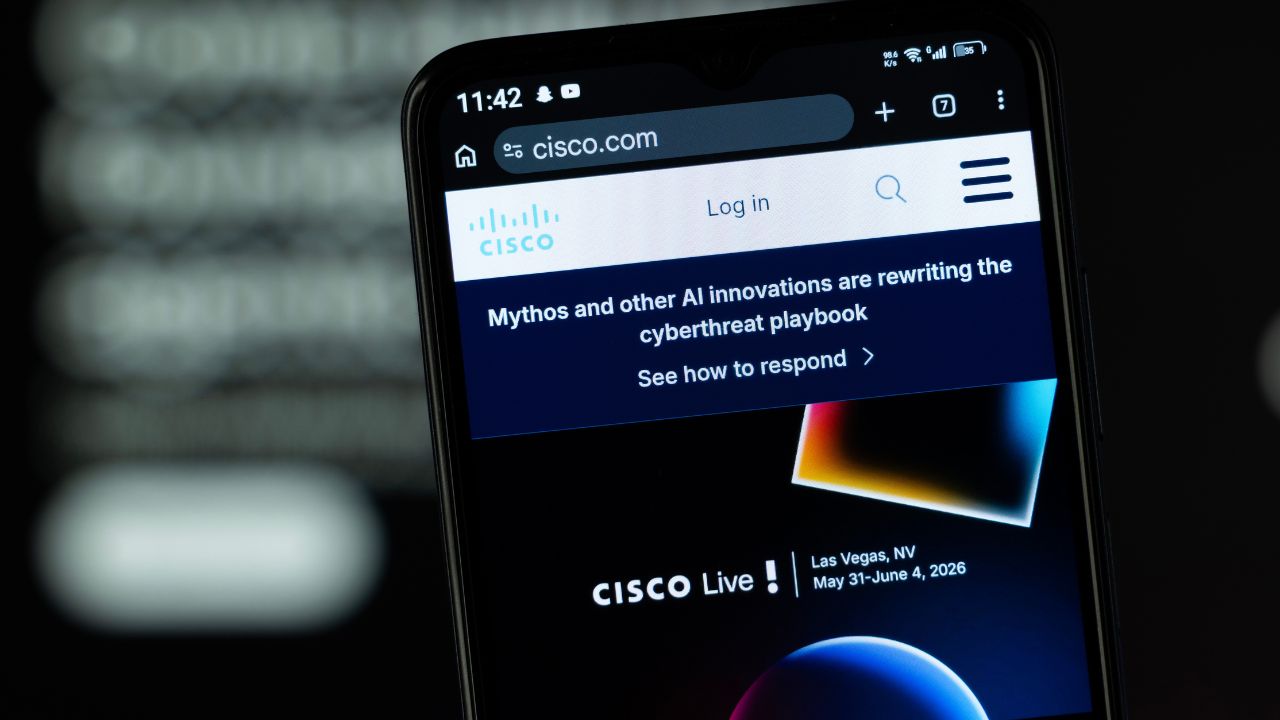
Cisco has launched a new Workforce Engagement Management (WEM) suite for Webex Contact Center, bringing workforce management, quality management, performance management, AI assistance and onboarding into a single platform designed to manage both human and AI agents.
The announcement, made at Cisco Live 2026, forms part of the company’s broader ambition to create what it describes as a “truly agentic” contact centre, where AI is treated as an active participant in service delivery rather than a standalone automation tool. The news comes only a few weeks after the business announced record revenues, fuelled by enterprise AI and agentic security demand.
At the centre of the launch are revamped workforce management (WFM) and quality management (QM) capabilities. Cisco says organisations increasingly need to forecast, schedule, and evaluate work across teams, with AI agents handling a growing share of customer interactions before escalating more complex cases to human colleagues.
According to the company, traditional workforce planning models are struggling to keep pace with this shift. Service leaders now tend to need visibility into AI demand, escalation patterns, and performance trends, while simultaneously managing changing responsibilities among human agents, who are increasingly expected to supervise, coach, and collaborate with AI systems.
Cisco’s new quality management platform is designed to evaluate human and AI interactions within a single environment. The company says this will allow organisations to better understand where automation performs best, where human intervention delivers stronger outcomes, and how customer interactions should be routed between the two.
Alongside WFM and QM, the company has consolidated Performance Management, AI-Powered Assist and a forthcoming AI-Powered Onboarding solution into the broader WEM portfolio.
Performance Management combines measurement, benchmarking, and real-time monitoring capabilities, while AI-Powered Assist provides live recommendations and knowledge guidance during customer conversations. AI-Powered Onboarding, due to launch in the coming months, will use simulated customer interactions to help new agents build proficiency more quickly and support experienced employees preparing for new products or services.
Finally, Cisco introduced AI Concierge, a pre-configured AI agent that acts as an intelligent front door for customer interactions. The tech evaluates customer intent, sentiment, and interaction history before coordinating responses across knowledge systems, AI agents, and enterprise applications.
When escalation is required, AI Concierge can identify what Cisco believes is the most suitable employee for the task and perform a contextual hand-off, including routing beyond the traditional contact centre to subject matter experts elsewhere in the business.
The Market Story Behind the Latest Webex Contact Center Update: Workforce Management Becomes Strategic Again
While much of the contact centre industry’s attention has focused on Gen AI agents over the past two years, Cisco’s announcement teases a different challenge emerging beneath the surface.
Many organisations have successfully deployed AI for self-service and agent assistance. Significantly fewer have addressed what happens when AI becomes a permanent part of the workforce.
That creates operational questions that most contact centres were never designed to answer. How should organisations forecast staffing requirements when AI volumes fluctuate? How should quality teams measure performance when conversations move between AI and human agents? Who is accountable when an AI agent delivers a poor outcome?
These questions are elevating workforce engagement management from a back-office operational function into an urgent strategic discipline.
Cisco is not alone in recognising the change. Across the customer experience market, vendors are increasingly repositioning workforce management, quality assurance, and employee development as critical components of AI transformation programmes.
What Cisco’s AI and WEM News Means for CX Leaders
For C-Suite and CX leaders, Cisco’s announcement reflects a growing recognition that customer service organisations are entering a hybrid era where human and AI workers must be managed together rather than separately.
That means developing new forecasting models that account for both automation and human capacity for workforce planners. For quality teams, it means evaluating AI and human performance against a shared set of customer outcomes. On the CX leader front, it means understanding when automation improves service and when human expertise remains the differentiator.
Then there are the implications for workers and human agents themselves.
As AI takes responsibility for routine enquiries, many agents are likely to spend less time answering straightforward questions and more time handling complex interactions, supervising AI-driven processes, and resolving exceptions. The role of the contact centre agent may incrementally evolve from transaction handler to customer problem solver.