June 11, 2026
Festival of Work 2026 Takeaways: The Efficiency Obsession With AI Is Backfiring
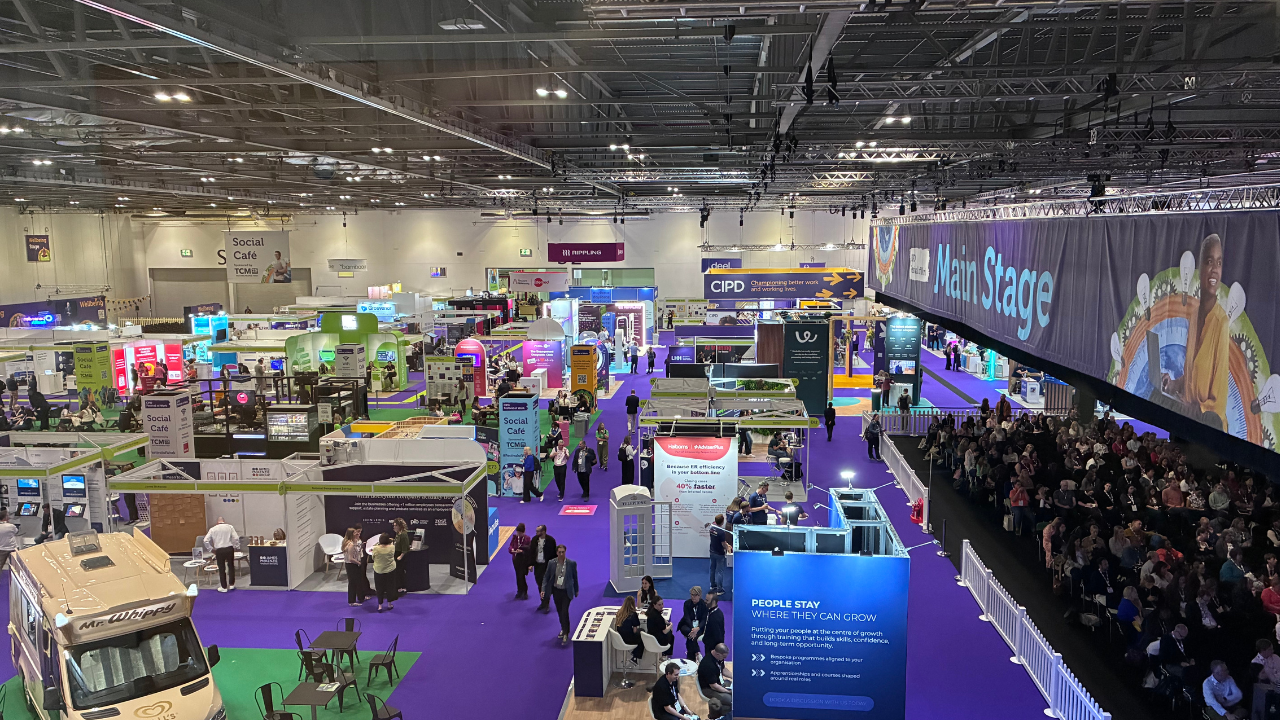
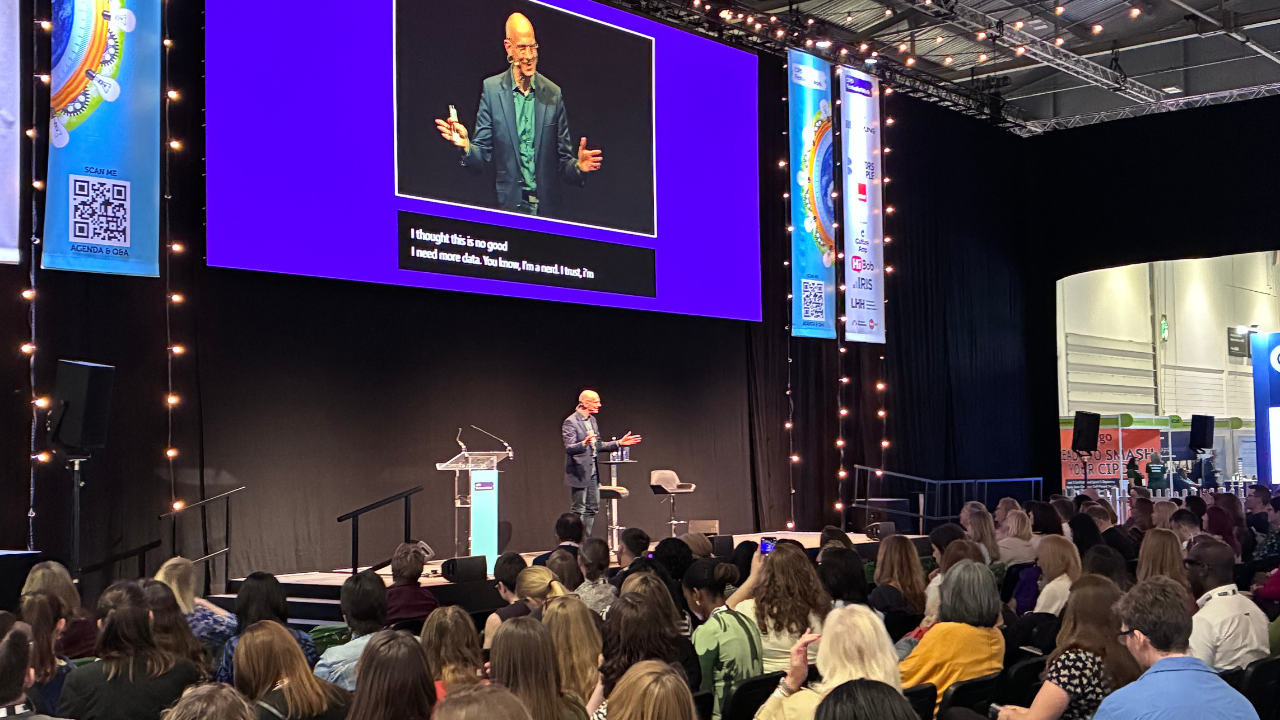
Peter Cheese opened the Festival of Work 2026 with a memorable comment that set the tone for the rest of the event. The pace of change has never been faster, he told the audience in his final address as Chief Executive of the CIPD, and yet it will also be the slowest it is ever going to be again.
Across the first day’s sessions and conversations, a golden thread emerged around people-centric, work-first AI approaches. The obsession with AI as a lever for efficiency is not bringing the results some hoped for. Pulling ahead are the organisations rethinking how people and machines work together, and protecting the trust and judgement that make a workforce worth having. Essentially, slow and steady (and strategic) will win the race.
Here are five key takeaways from Festival of Work 2026.
AI Has Made Work Faster, but Not More Coordinated
Atlassian’s VP of HR, Alicia Lenart, described the current moment as an orchestra without a conductor. Work has accelerated, but coordination has not kept pace.
Drawing on Atlassian’s 2026 State of Teams research, 48% of executives say AI has increased the speed of work, while just 6% are confident they can point to clear organisation-wide return on investment. Among knowledge workers, 87% say that with everyone in execution mode they often lack the time or capacity to coordinate, while 84% have unclear goals or conflicting priorities.
That fragmentation carries a price, which Lenart put at $161 billion a year across Fortune 500 organisations. The teams closing the gap reduced their ‘fragmentation tax’ by 46% and were 9.4 times more likely to say AI improved collaboration. Lenart’s key takeaway for people teams is that speed is the easy win, and coordination is the harder, more valuable one.
The same caution surfaced in an expo-floor conversation I had with Nina Carøe, Chief Human Success Officer at Zensai. Carøe argued that individual efficiency gains can be a partial myth. In one example she cited, engineers applied less than half of what they generated with AI, so the headline time saving never materialised – they now just do different things.
In another conversation, former Accenture managing director and founder of Humari, Joe Hildebrand, named related patterns. He referred to “proof of concept purgatory”, where organisations stall after the pilot, and an efficiency trap, where the pursuit of speed blinds leaders to the higher-value uses of AI in employee and customer experience.
The Shift From Adopting Tools to Designing Work
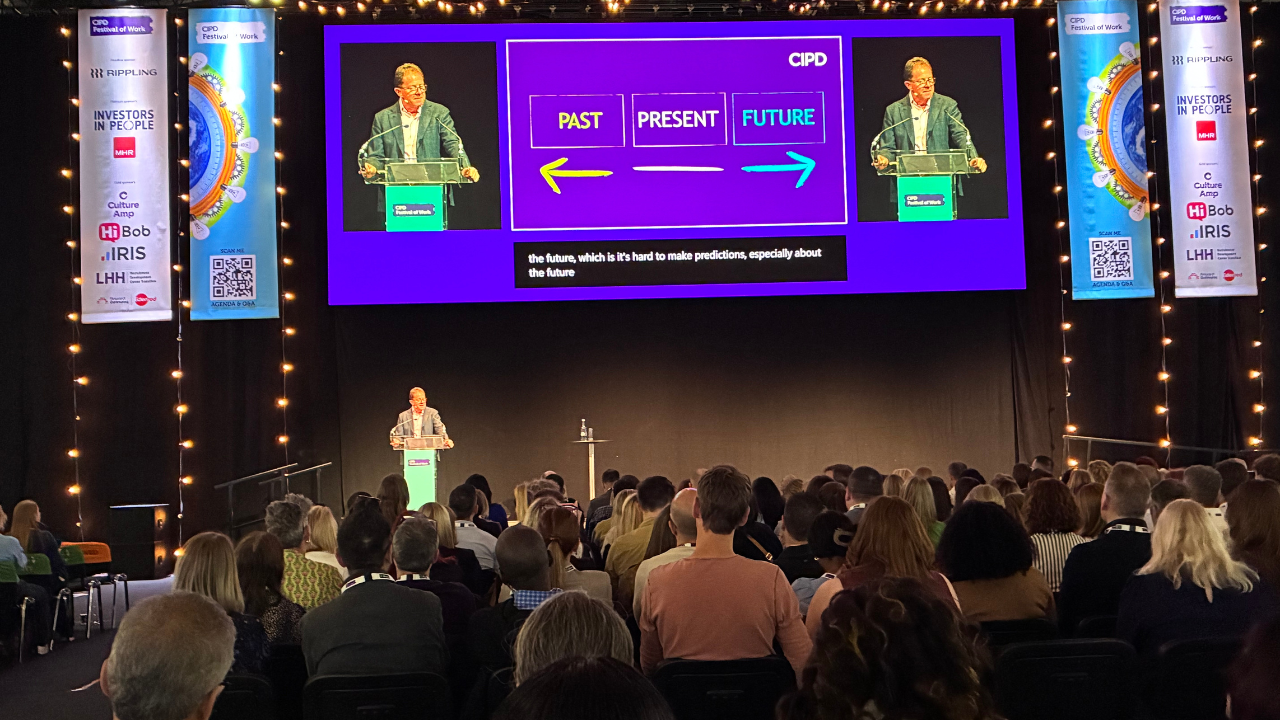
If there was one headline piece of practical advice repeated across the event, it was to start with the work rather than the technology. Lenart urged teams to design around the work, not the org chart, because the chart is too rigid for the pace of change.
Carøe made the same point from the operating side: sprinkling AI on top of existing processes will not make an organisation more efficient. The gains come from understanding the underlying workflows and empowering them with AI horizontally across the business, rather than in departmental silos.
Phase 3’s Paul Glover and Louise Johnston made the procurement version of the same point. Buying a system to fix a process you haven’t redesigned first is a common, costly mistake, and integrations should be a selection criterion, not an afterthought.
Hildebrand framed it as a choice between an AI-first culture and a human-first one, and came down firmly on the side of the human. Begin with the questions, not the answers, he said, finding the genuine friction points in a workflow before offering people a safe space to experiment.
Engagement and Performance Are One Story
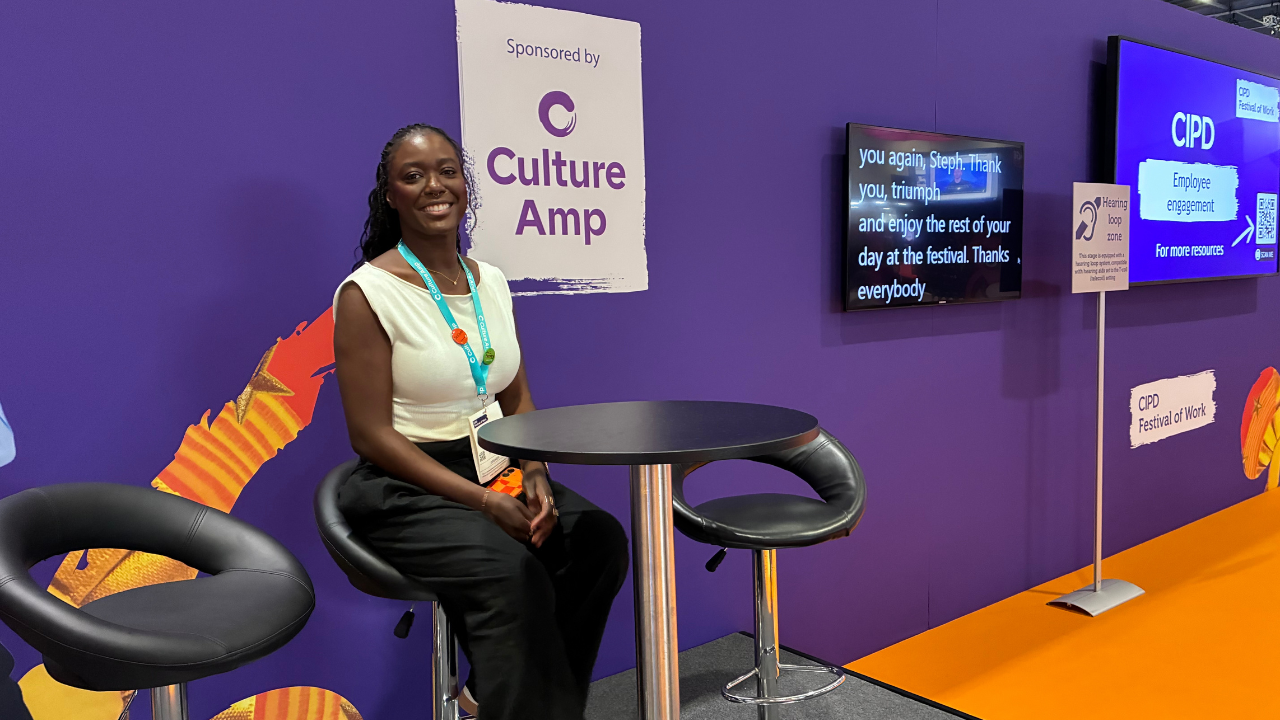
Steph Kukoyi, a senior people scientist at Culture Amp, held a session to challenge a growing habit among people teams. As business volatility persists, there is rising pressure to prioritise performance over engagement. But this choice rests on the belief that performance and engagement are two separate entities. This is a false assumption, Kukoyi argued.
Drawing on Culture Amp’s data set of more than 1.5 billion data points across 6,800 organisations, she argued that performance is shaped by environment, not personality. Only 11% of employees have ever received a top performance rating, and just 2% of those sustained it two years running.
The organisations that combine high engagement with what Culture Amp calls ‘performance confidence’, the belief that the business will succeed, reach a peak performance culture. In Culture Amp’s research, those organisations increased their stock price by 21% over one year and 36% over two, with retention at 88%.
I spoke with Kukoyi ahead of her talk about the connection between peak performance and customer experience. She mentioned a Culture Amp study of customer-facing organisations in which areas of high engagement correlated with higher Net Promoter Scores, underpinned by stronger psychological safety. When people feel able to be themselves, the service they give feels more authentic, and customers notice.
Short-Term AI Strategies Put Trust at Risk
Several speakers returned to trust as the foundation that AI-driven change most threatens. Carøe had strong views about the cost of using AI as a reason to cut headcount. Layoffs may move the numbers in the short term, she argued, but they erode the security and trust that allow an organisation to innovate, and the recovery takes longer than the saving lasts.
I asked her about AI fatigue, a rising workplace burnout issue caused by excessive AI use across multiple tools, as well as anxiety about the future. People feel they are perpetually behind on AI, Carøe responded, which is a real drain on wellbeing.
Zensai addresses this by mapping transformation as a series of stages and being explicit that this year, reaching stage three is enough; stages four and five can wait. That clarity, she suggested, replaces anxiety with a realistic sense of progress. It is a practical expression of Cheese’s own warning that without a sound people strategy, the rest of the plan is like “a stool with a missing leg”.
A Word of Caution on Measurement Obsession
The day-one closing keynote from economics journalist Tim Harford OBE offered a useful counterweight to a day full of dashboards. He described the phenomenon of value capture, where rich and complex human values are gradually taken over by something simpler and easier to measure, until the metric runs the show.
He also talked about a related cognitive bias, quantification fixation, where people compare options and consistently favour whichever attribute happens to carry a number. Qualitative data takes a back seat.
The target of walking 10,000 steps, for example, has no scientific basis, yet it changes behaviour, with people stopping after they hit that number. “Nobody stops at 9,900,” Harford said.
Ingham touched on the specific problem here for people teams. The data on the “human stuff” is more qualitative, subjective and “squishy”, and is therefore harder to tie to a clear return on investment. But, he argued, “If we only do people things because of the business results, that’s being business-centric not people-centric.”