January 08, 2026
PC, Auto and Cloud Technologies Changing Lanes Fast At CES, As Digital Experiences Evolve
Many worker and consumer digital experiences are still rooted in the laptop or smart device that users or businesses upgrade every few years. With smart glasses, a heavy push into AI-automotive tech, and smart communities, things could be due to change as technologies hop from one platform to another.
The latest products, revealed at CES, might well be packing AI as a headline feature, except Dell, more on that in a moment. But, other smart advances are driving user experiences forward in ways that other service and product makers can consider.
Meet HP’s New Digital Passport
All PCs have a barcode on the bottom for the business to refer to for service matters, but HP has gone a step further and made it a part of the customer digital experience. The new digital passport is unique to each device, helping speed up support and installation, while cutting back on the raft of manuals hardware typically ships with.
For business users, the passport can act in asset identification and tracking, and support management. For end users, the passport gives customers one place to access their PC essentials; from getting started, feature discovery, understanding their device’s sustainability story, and finding support options.
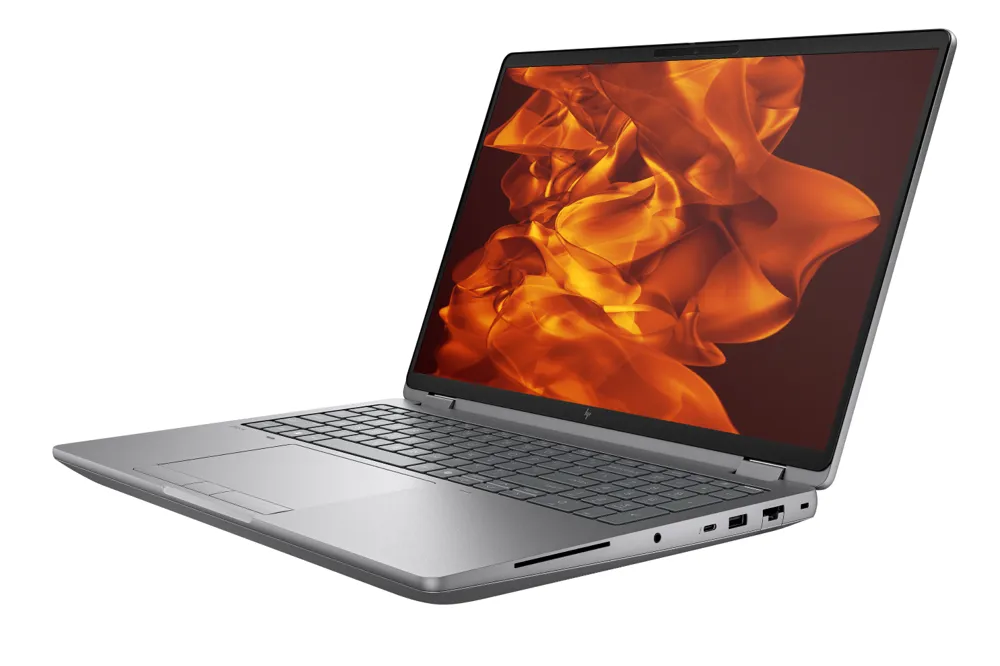
From the latest ZBook Fury G1i 18-inch Mobile Workstation PC to OmniBooks and Studio or gaming devices and desktop systems, the service acts as a great way to authenticate and simplify install and operations.
And, from smart cars to phones, power tools to plant machinery, a new generation of embedded identification could help solve the ongoing crimewaves in future generations.
Dell Not A Fan of AI PCs
The biggest off the cuff headline from CES shows the woes many firms have with AI. When artificial intelligence became a thing, most brands rushed to add an AI button to their PCs, but the cloudy nature of AI, and the availability of AI services on apps, websites, within Windows and other avenues, made it a largely redundant feature.
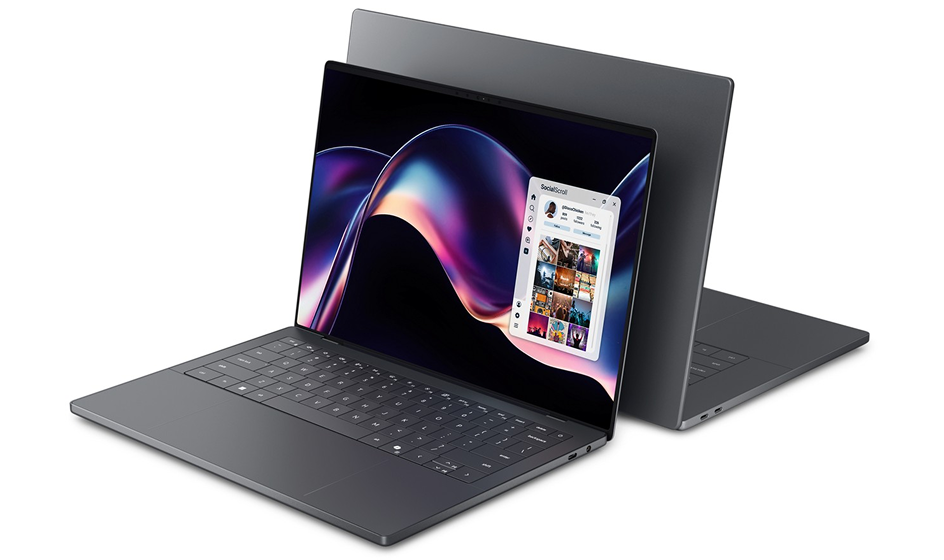
Dell expressed this thought best, with the company’s head of product, Kevin Terwilliger, talking to PC Gamer, said “What we’ve learned over the course of this year, especially from a consumer perspective, is they’re not buying based on AI. In fact I think AI probably confuses them more than it helps them understand a specific outcome.”
Now, while business users might have a different view, in operational reality, their digital experience involves logging into a CX SaaS product and accessing the AI features within that application. Most businesses limit access to other AI tools, or risk the usual perils of untrained data, copyright risk and other issues.
Microsoft Ramps up the AI Cloud
Microsoft has struggled with AI recently, noting that Copilot is unpopular with the desktop userbase. And the company is earning a “microslop” tag for using AI to update Windows and apps, with less-than-impressive results.
Beyond the desktop, the company announced it will ramp up its AI data centres with the new NVIDIA Rubin cores, helping bring down the costs of AI and limit the risk of a power race and stock bubble.
The Seattle company also talked a lot at CES about its role in automotive, noting that “Across all industries, and especially within automotive, the adoption of AI and AI agents has enabled improvements in design, requirements management, coding, and vehicle engineering functions, leading to enterprise efficiency, rapid innovation, customer satisfaction, and shorter overall development times.”
Chip Vendors and Big Business Changing Lanes
Car AI gets a boost with NVIDIA’s latest AI, Alpamayo, a reasoning‑based autonomous vehicle (AV) development platform. That represents a move up the AI value chain and a “ChatGPT moment for physical AI,” accoding to CEO Jensen Huang.
Over at rival AMD, AMD Chair and CEO Dr. Lisa Su discussed how the company’s portfolio of AI products and deep cross-industry collaborations are turning the promise of AI into real-world impact, highlighting that AI is everywhere and for everyone. Su unveiled new AI-focused products, including the Ryzen AI 400 Series for next-gen AI PCs, the MI440X GPU for enterprise, and the Ryzen AI Halo developer platform, emphasizing AI integration from data centers to edge devices and real-world applications with partners like OpenAI.
Siemens unveiled technologies to accelerate the industrial AI revolution. Athina Kanioura, CEO, Latin America and Global Chief Strategy and Transformation Officer of PepsiCo discussed how PepsiCo uses the Digital Twin Composer software to simulate upgrades to its facilities in the U.S. with plans to scale globally. Siemens highlighted new technologies for accelerating drug discovery, autonomous driving, and shop floor efficiency. In manufacturing, Siemens announced a collaboration to bring Industrial AI to Meta Ray-Ban AI Glasses.
Such is the size of CES and the flood of releases, there’s probably a lot more to cover, as digital experiences proliferate and reform under a barrage of new hardware and software.