January 19, 2026
WEF’s Davos 2026 Meeting Kicks Off With All Eyes on Agentic AI
The World Economic Forum’s annual gathering of the political elite, insanely wealthy, many other stakeholders trying to rescue/improve the world kicks off in Davos, Switzerland today.
Leading the discussions will be around 100 unicorn founders and technology pioneers. From supply chains to clean fuel, and AI to cyber fraud, all topics are on the agenda including customer experience and the world of work.
The 56th meeting runs over this week, gathering leaders from business, government, international organisations, civil society and academia under the 2026 theme of “A Spirit of Dialogue.” As typical media coverage is focused on the big hitters, follow along with the official live blog here.
Supporting The Customer Who Wasn’t There
With outlooks on economies, global cyber risks, and more, one thing the WEF is good for is a barrage of reports.
Leading the charge is the new “What works in AI: The leading companies turning AI into real-world impact”, recognising companies that use AI to deliver real impact across sectors.
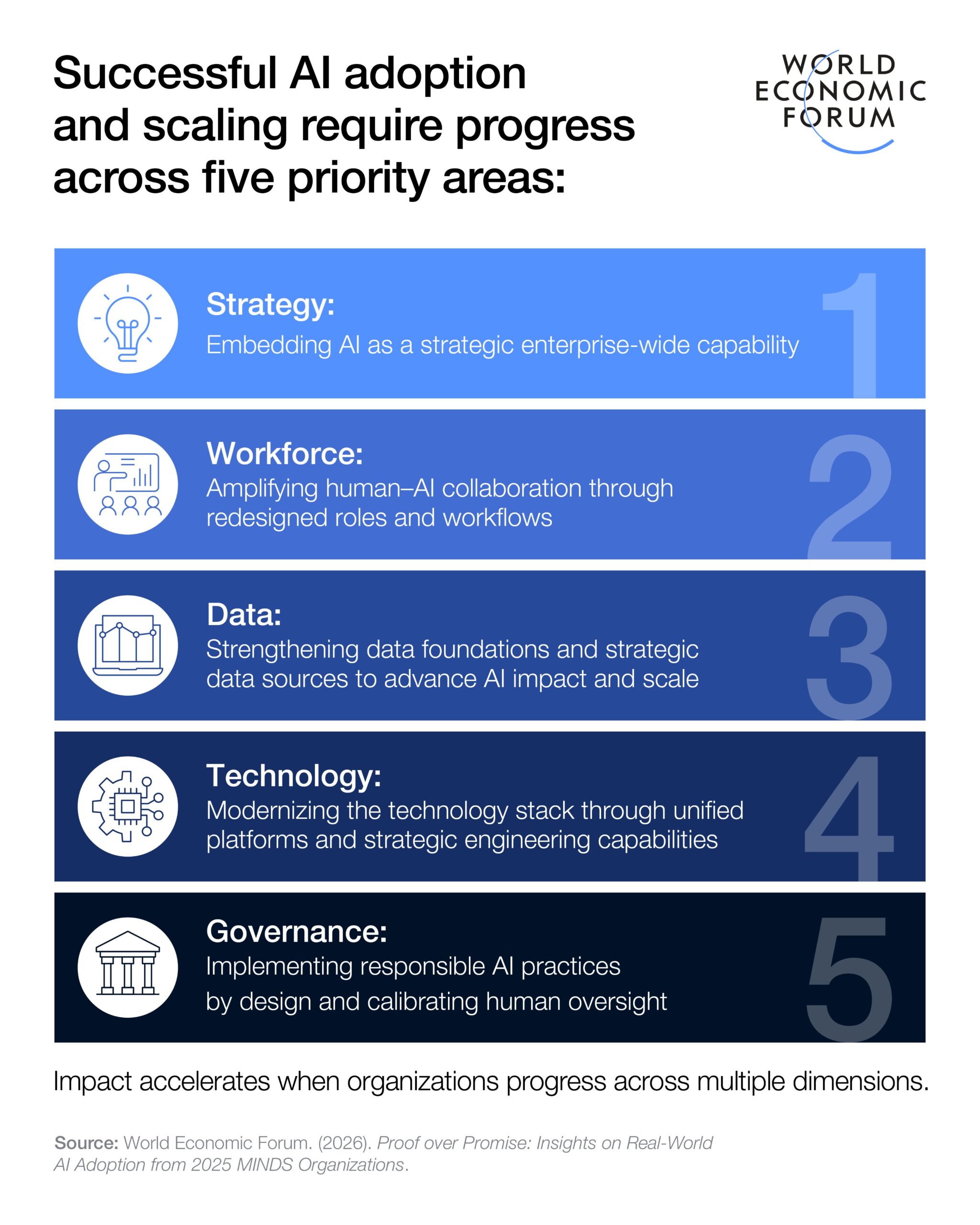
Across climate, health and industry, the report identifies where AI is hard at work, citing the likes of
“Cambridge Industries that empowers cities to keep roads safer and sites compliant through locally governed AI, making complex engineering knowledge accessible to everyone.”
And “Tech Mahindra is building multilingual AI models that support Hindi, Bahasa and regional languages often overlooked by global systems.”
Another recent example, “In the age of agentic AI, brands need customer experiences for when the customer isn’t there” focuses on commerce when the human is out of the loop, noting that:
“This isn’t about removing people from the equation. It’s about showing up in ways that earn trust at every layer, especially the invisible ones. The adage that brands don’t get a second chance to make a first impression will hold up. The systems we build must be prepared to convey the nuance, emotion and intent of the enterprise on the customer’s behalf.”
Planning the 2030 World of Work
And the “Four Futures for Jobs in the New Economy: AI and Talent in 2030” explores how AI advancement and talent trends, and their potential trajectories until 2030, could transform the future of jobs.

From stalled projects to supercharged progress and the co-pilot economy, it paints a challenging picture with implications for businesses and employees.
With Gen-Z workers leading a charge in lily padding careers, plus many macro and micro trends, the working environment is changing fast.
One positive is the January 2026 Chief Economists’ Outlook opens on a cautiously brighter note compared to last year.
Check back for more of the real stories as Davos gets up to speed and the ideas come thick and fast for improving the world.