June 11, 2026
Festival of Work 2026: AI Can Strengthen the CX–EX Link – or Sever It
We’ve known for a long time now that ‘happy employees equals happy customers’. But what is changing is how quickly that CX–EX link can be strengthened or broken as AI becomes increasingly embedded into work.
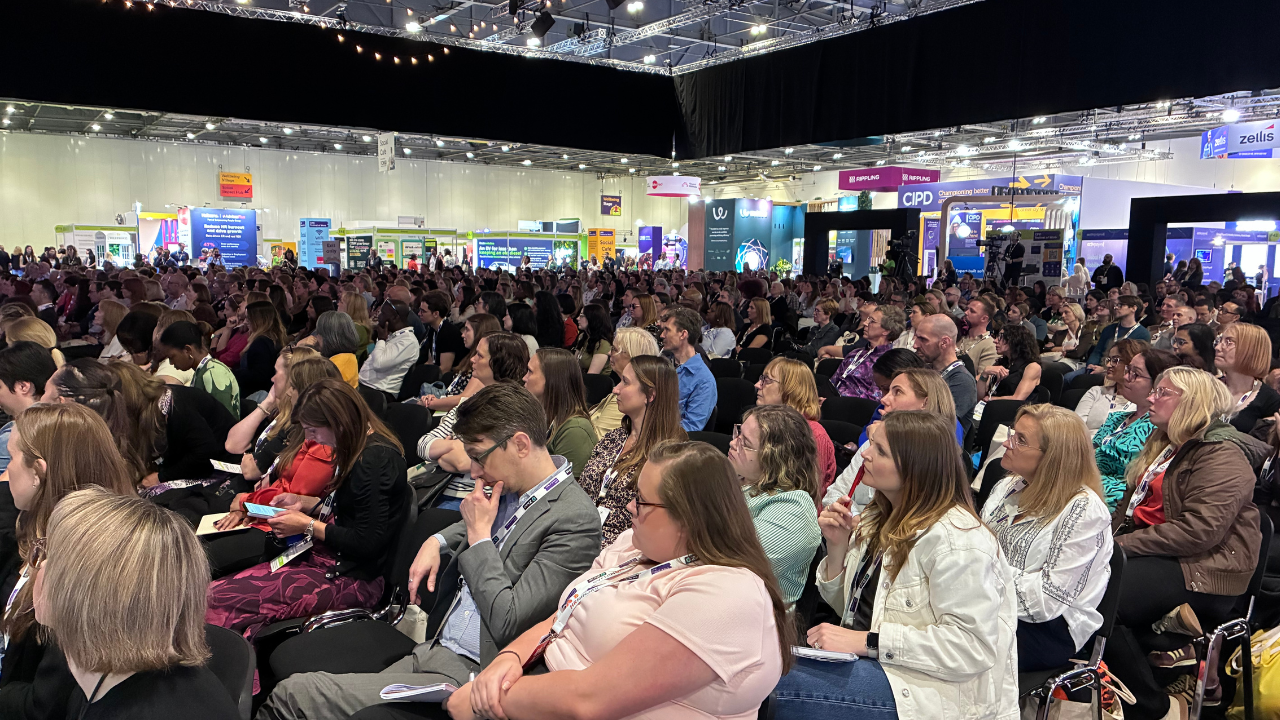
At Festival of Work 2026, the case was made from different angles: Steph Kukoyi, a senior people scientist at Culture Amp, with the employee data, and Nina Carøe, Chief Human Success Officer at Zensai, with the operating reality.
The Data Behind the CX–EX Link
Kukoyi spoke about performance being shaped by environment, not personality. Drawing on Culture Amp’s data set of more than 1.5 billion data points across 6,800 organisations, she noted that only 11% of employees have ever received a top performance rating, and just 2% of those sustained it two years running.
High performance, in other words, is something organisations create rather than something individuals simply possess.
The organisations that manage it combine high engagement with what Culture Amp calls performance confidence, the belief among employees that the business will succeed. Reach both and you have a peak performance culture, which in Culture Amp’s research correlated with a 21% rise in stock price over one year and 36% over two, alongside 88% retention.
Kukoyi presented those as business outcomes rather than customer experience ones, but the two are hard to separate. Sustained gains in stock price rarely happen without customers experiencing something better along the way.
Asked about this ahead of her session, Kukoyi pointed to a different Culture Amp study, which showed that in customer-facing organisations areas of high engagement correlated with higher Net Promoter Scores, with stronger psychological safety underneath.
Where psychological safety is high, she argued, people feel able to be themselves, and that authenticity carries into how they treat customers.
Where AI Strengthens the CX–EX Link
Used well, Carøe argued, AI can deepen that human connection rather than dilute it. She described workflows where AI listens in the background so that a customer-success manager always knows what is relevant to each account, replacing generic check-ins with closer, more personalised conversations, even across a large portfolio.
The benefit runs both ways. Customers get relevance, and employees spend less time on non-relational admin and more on the relationship-building that drew them to the work in the first place.
This is the version of AI that supports the CX–EX link. It starts from the underlying work, removes friction for the employee, and improves the moment the customer actually experiences.
The key, in Carøe’s framing, is quality: AI has to add genuine intelligence, because poor AI can damage relationships rather than build them.
Where AI Breaks It
AI breaking the link, though, is the more common outcome. Carøe was blunt that when AI is sprinkled on top of existing processes to increase speed or cut headcount, the result tends to hurt the brand. She shared a personal example: a return she expected to be refunded automatically, followed by a chatbot that trapped her in a loop it could not resolve. This left her thinking twice about ordering from a known brand again.
That experience has a workforce cost too. When customers pass through several automated steps without reaching a human, they arrive frustrated, and it is frontline employees, often younger and more junior, who absorb that frustration.
The same dynamic shows up in how organisations handle change. Layoffs framed as AI savings, Carøe argued, erode the trust and security that allow people to innovate. And a workforce recovering from that shock is not at its best when it faces customers.
Designing for Value, Not Efficiency
Carøe believes organisations need to think in terms of value per employee rather than headcount. This enables people to focus on what creates value once AI takes on the work they never wanted to do.
There is a measurement warning embedded here too. Kukoyi flagged a persistent perception gap, where senior leaders rate the culture more highly than frontline staff experience it. Closing that gap, and measuring the people-centric outcomes that feed customer experience, matters more as AI makes it easier to optimise for the wrong thing.