July 08, 2026
Human and AI Workforce Management: Why Managing Hybrid Human and AI Teams Changes Everything
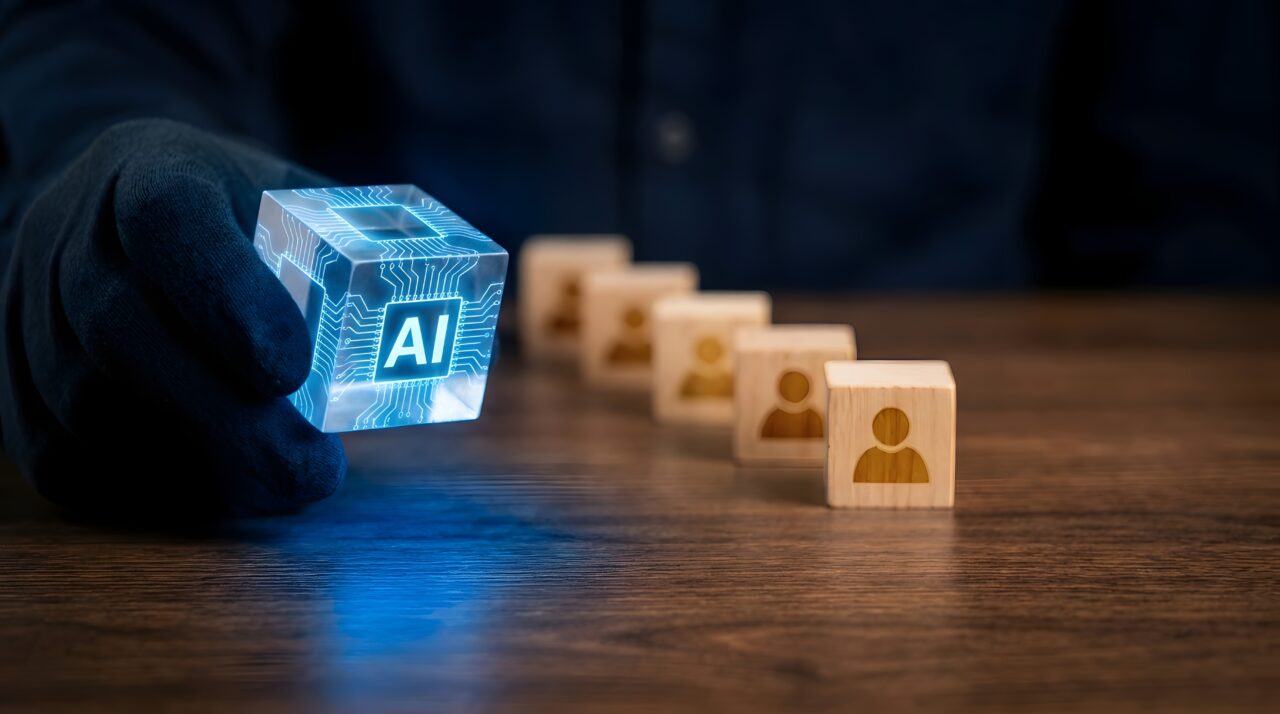
Like it or not, AI colleagues have officially become a real part of the workforce. We’re not just using AI tools any more; we’re delegating the same tasks to AI assistants that human beings have been tackling for years.
Gartner thinks agentic systems will be resolving about 80% of standard service issues by 2029, and companies like Salesforce and NiCE already say they’re “running the contact centre.”
What’s odd is that despite all that, a lot of companies still don’t have much of a plan for how they’re going to manage their hybrid workforce. 47% of leaders admit their management plan doesn’t cover agentic AI tools at all.
That matters, because managing schedules, forecasting demand, training teams, and protecting customer experience now depends on your approach to human AI workforce management.
AI isn’t just a feature any more. It behaves more like workforce capacity, creating risk, performance variance, and governance challenges just like any human contributor would.
What Is Human AI Workforce Management?
Human and AI workforce management isn’t the same as “AI-powered WFM.” That’s worth saying upfront. You’re not simply taking a smarter approach to orchestrating human staff; you’re developing a plan for how people and machines are going to work together.
It’s an idea a lot of companies are still struggling to get their heads around, mainly because they’re still thinking about AI like it’s a feature upgrade.
In practice, AI tools today are just as central to CX workflows as human staff members. Both bots and people carry workloads that directly shape customer outcomes, sharing queues and influencing the same KPIs and NPS scores. That’s the new hybrid team.
The biggest mistake leaders tend to make is assuming AI systems automatically lead to less work for humans. Even conservative predictions from companies like Cisco assume agentic AI will be handling almost 70% of repetitive CX interactions by 2028. But that doesn’t guarantee less work for people. It usually just means human employees end up with different work.
Human beings still generally end up managing the tougher stuff: sensitive conversations, escalations, and billing disputes with customers who already tried to fix the issue themselves twice. Human and AI workforce management needs to account for this shift in responsibility, and it usually doesn’t.
Human AI Workforce Management: From Staffing to Orchestration
So why don’t companies just add “AI agents” to their existing WFM tools and treat them like any other employee? The simple answer is that traditional workforce models assume AI tools reduce demand evenly. Bringing more AI agents into your workforce doesn’t mean you’re distributing the same type of work to every “employee.”
At that point, you’re no longer just tracking headcount, occupancy, and service levels. You’re directing traffic between two very different types of workers, which is really a form of orchestration.
AI agents don’t just assist. They decide things, route conversations, summarise interactions, approve refunds within thresholds, and surface next-best actions, sometimes faster than your human review processes can keep up with. A lot of companies still haven’t fully decided what should be in charge of decisions in a human-AI team, or why.
When you start managing hybrid human and AI teams, ambiguity becomes expensive.
- If an AI escalates too late, the human inherits frustration.
- If it escalates too early, efficiency drops.
- If it resolves incorrectly but confidently, recontact spikes, and no one connects the dots fast enough.
Poor orchestration shows up in customer effort scores, repeat contact rates, and agent fatigue.
Then there’s drift. If containment slips five points because product rules changed or knowledge wasn’t updated correctly, that volume doesn’t disappear. It lands on human agents immediately, and most planning systems don’t simulate that kind of shock.
Designing For a More Mentally Taxing Role
McKinsey says up to 30% of today’s worked hours could be automated by 2030. That figure gets quoted everywhere, almost as a headline in its own right. But the real question isn’t what disappears. It’s what’s left.
The remaining hours don’t stay the same. They get heavier, demanding more judgment, more nuance, and more cleanup when something upstream goes wrong. They’re harder to script, harder to measure cleanly, and harder to turn into tidy process maps.
If you don’t design for that shift explicitly, your service levels wobble, your agents burn out, and your NPS starts drifting without anyone fully understanding why.
The Playbook: Improving Human and AI Workforce Management
If you really want to master human and AI workforce management, you have to change how you plan work. You’re managing a blended system, not simply a team with an extra tool bolted on.
Treat AI Like Workforce, Not Just a Tool
Most AI programmes are still managed like software rollouts, with a launch date, a success metric, and maybe a quarterly review.
But if an AI agent resolves 15,000 contacts a week, escalates 18% of them, and drives a 6% recontact rate, that’s workforce behaviour.
You wouldn’t deploy a human agent without tracking:
- Error patterns.
- Escalation triggers.
- Coaching needs.
- Skill gaps.
Yet plenty of organisations deploy AI without documenting its strengths, limits, or failure modes. Start treating AI tools like colleagues instead, and give them role profiles that define:
- What types of contacts it handles reliably.
- Where it struggles.
- What confidence threshold triggers escalation.
- How often it requires knowledge updates.
- What its failure looks like in the customer journey.
Forecast Blended Workflows, Not Just Volume
Traditional WFM says: forecast contacts, and schedule agents. Hybrid reality says: forecast AI behaviour first, then model what spills over. That means estimating:
- Containment quality, not just containment rate.
- Retry loops.
- Escalations caused by low-confidence responses.
- Rework generated by AI misfires.
When AI agents struggle with knowledge gaps, humans don’t simply pick up the conversation where it left off. They end up handling a more complicated interaction involving apologies, de-escalation, and fixing whatever mistakes the system may have already made.
The work distributed to humans becomes more emotionally intense and harder to wrap up quickly. If you plan for shifting volume but not for shifting cognitive load, your customer satisfaction and employee experience scores will tell you soon enough.
Update Scheduling Strategies for Human AI Workforce Management
Executives love declaring AI a “success” when containment improves and cost-per-contact drops. They tend to miss what’s happening for frontline teams, whose average handling times lengthen because the contacts reaching them are now harder, more emotional, and more layered.
Avoiding burnout, AI fatigue, and eventual disengagement means changing your scheduling strategy. You’re not just making sure enough agents are logged in to meet service levels; you’re also building in allowances for oversight.
AI doesn’t monitor itself. It needs review cycles, drift checks, escalation pattern analysis, and knowledge updates, and someone has to own that time.
You also need to think about the additional workload AI agents can create. That means planning capacity for:
- Escalation buffers.
- AI performance reviews.
- Knowledge hygiene.
- Recovery from clustered failures.
- Fixing AI workslop.
It’s also worth planning for what happens when AI tools don’t do their part of the work. What happens when systems stop working as they should, hallucinate, or make mistakes?
Train for Supervision, Not Just Usage
AI adoption looks strong at the executive level. It’s a different picture at the frontline.
82% of executives report using AI, compared to only 35% of regular employees. Leaders trust the tools they’re rolling out; employees don’t feel the same confidence.
Part of the problem is AI training. Companies roll out AI tools and expect teams to work alongside them without giving any real guidance. Staff members end up trying to figure it out for themselves, making mistakes, or giving up and using their own shadow tools instead. Both outcomes carry real risk.
If you want human AI workforce management to hold up, training has to cover:
- How AI makes decisions.
- When to override.
- How to explain AI outcomes to customers.
- How to flag model drift.
- How to document escalation context properly.
It also has to address fairness and trust. Only 43% of employees believe AI-assisted decisions are fair, and that perception influences how consistently agents apply AI recommendations.
When agents distrust the system, they second-guess it, overrides spike, and processes slow down, eroding the efficiency gains AI was meant to deliver. When they trust it without question, errors compound quietly until a customer escalates. Either extreme creates damage.
Address Governance and Risk Early
Everyone likes discussing efficiency. Fewer people want to talk about failure modes, but AI agents still aren’t foolproof, so you need a governance strategy your teams can get behind.
For most companies, that starts with defining decision boundaries. Determine:
- What AI can decide autonomously.
- What requires human approval.
- When escalation must trigger.
- Who reviews edge cases.
- Who owns customer outcomes end-to-end.
Make sure all of this is clear to your human teams, then plan for hybrid failure modes.
AI fails differently to humans. It doesn’t get tired, but it does drift. Policy changes, product updates, and knowledge base edits that don’t sync properly all lead to mistakes, and traditional WFM tools don’t generally catch them.
That’s why human AI workforce management needs explicit risk modelling:
- Containment drift thresholds.
- Retry pattern tracking.
- Escalation clustering alerts.
- Downtime surge planning.
If AI goes offline unexpectedly or stops working as it should, the surge hits human queues immediately, so you need buffer capacity designed in advance.
Measure the System, Not Just the Parts
Most dashboards still separate metrics into “bot performance” and “agent performance.” Hybrid systems don’t behave that neatly, so you need a blended scorecard.
AI layer
- Containment quality.
- Retry loops.
- Drift signals.
Human layer
- Escalation resolution time.
- Recovery quality.
- Emotional load indicators.
Collaboration layer
- Handoff quality.
- Time to full context.
- Recontact after AI-first journeys.
If NPS dips, you should be able to trace whether it originated in AI containment quality, human recovery performance, or breakdowns in handoff. This isn’t about adding more dashboards. It’s about connecting cause and effect across the hybrid system.
Human AI Workforce Management: The Technology and Operating Model
You can’t run human and AI workforce management on disconnected tools, even if a lot of organisations keep trying to. Plenty of teams have AI orchestration tools in one platform, WFM in another, and quality monitoring and HR systems somewhere else entirely. That fragmentation makes true hybrid workforce management practically impossible.
Start by building an operational layer that gives you a shared view of work. Plenty of AI-driven CCaaS solutions from companies like NiCE and Salesforce now show human insights alongside:
- AI containment behaviour.
- Escalation paths.
- Human resolution outcomes.
- Recontact drivers.
- Knowledge updates.
Alignment between those data sources improves decision-making. Once you have that shared view, make sure someone on your team owns:
- AI performance oversight.
- Drift monitoring.
- Knowledge integrity.
- Escalation pattern analysis.
These responsibilities don’t map neatly onto traditional supervisor roles. In many operations, they’re scattered across IT, CX operations, and data teams, and that fragmentation slows response time whenever containment quality slips or recontact rises.
Finally, think about the confidence layer. Your operating model needs to nurture trust in your hybrid setup. That means demonstrating transparency in how AI decisions are made, keeping clear documentation showing when humans should intervene, and making sure managers provide ongoing training tied to real performance metrics.
Without them, you get friction that eventually shows up in customer satisfaction issues and employee attrition.
Human AI Workforce Management: Supporting the New Workforce
AI is already a core part of workforce capacity. Yet almost half of enterprises admit they don’t have a real strategy for managing AI agents as contributors, and that’s a genuine problem.
If companies want real value from their new AI teammates without creating hidden risk, they can’t wing it. They need a management model that treats AI as operational capacity rather than background software: spelling out decision boundaries, rethinking schedules, and redistributing work intentionally instead of letting complexity pile up wherever it lands.
Otherwise, the system runs, but no one’s really steering it. Eventually, your human employees will burn out, and your customers will start drifting away.