
January 26, 2026
Hyperpersonalisation Fails When Brands Don’t Know When to Stop
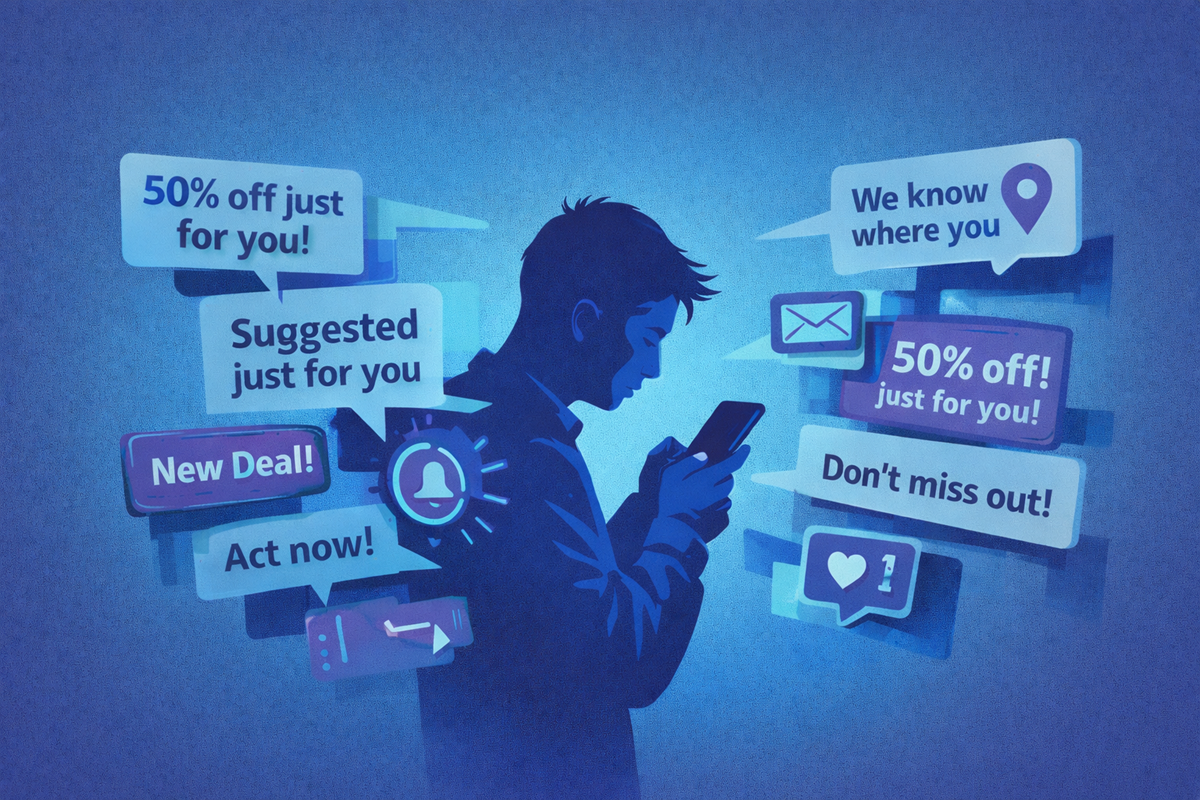
Hyperpersonalisation is often touted as the next frontier of customer experience. The promise that brands can know exactly who their customers are, what they want, and when they want it.
But for many organisations chasing this ideal, the reality is messier and riskier than the glossy vision suggests.
Despite advances in AI, data analytics, and CDPs, most attempts at hyperpersonalisation fall short because they prioritise data accumulation over judgement, algorithmic breadth over contextual sense, and pushing interactions over respecting the customer’s state of mind.
Hyperpersonalisation can fail in three critical ways: it creeps customers out, it misreads their needs, and it collapses trust when companies don’t know when not to personalise.
Technology First, Judgement Second
Hyperpersonalisation stumbles on the assumption that more data automatically equates to greater relevance. The truth is, many organisations don’t have the right data plumbing in place, let alone the judgement to interpret it.
Steven Van Belleghem, a CX specialist and keynote speaker, said that personalisation must go beyond conversion metrics and focus on “creating real value in people’s lives”, a subtle but important distinction that many organisations miss when they optimise for data signals instead of actual human outcomes.
Adobe’s Digital Trends suggest only a small minority of organisations believe their customer data is mature enough to support personalisation at scale. Most are still working with fragmented systems, delayed signals, and partial customer views, turning “hyperpersonalisation” into an ambition rather than a reality.
When data lacks context or cannot be connected across channels, even advanced models optimise guesses instead of insight, leading to experiences that feel strangely precise in some moments and irrelevant in others.
Don’t Make Relevance Feel Like Intrusion
A recurring theme among dissatisfied customers isn’t that they dislike personalisation per se; it’s that they didn’t consent to the depth of insight brands seem to claim.
Over-personalisation can cross a boundary where it feels uncomfortable or invasive. Marketing that references specific behaviours or internal search terms might seem clever in dashboards, but when customers recognise how precisely their activity is being tracked, especially without clear consent, the effect can be alienation and loss of trust.
This is the personalisation-privacy paradox in action: customers want relevance, but they also want control and transparency. Brands should respect the implicit social contract, personalising within the zones customers expect (like logged-in contexts or opted-in communications) and stepping back where they don’t.
Data Without Context Is Noise
Even when brands have access to broad datasets, the challenge is not simply collecting more data, but understanding what matters and when. True relevance is about interpreting enough to make the experience feel thoughtful rather than tactical. In many cases, over-granular targeting turns into a distraction, or worse, feels creepy.
Industry practitioners have flagged key mistakes that lead personalisation efforts astray: relying too heavily on firmographic information alone; acting on assumptions instead of validated insights; and optimising for short-term engagement metrics like click-through rates at the expense of long-term loyalty.
Ultimately, hyperpersonalisation lives or dies by judgement, and without it embedded in strategy rather than code, brands mistake motion for meaning.
Moments Brands Shouldn’t Personalise
There are moments in the customer journey where personalisation brings value, and others where it simply doesn’t belong:
- Unexpected interruptions — pop-ups and triggers based on minor behavioural cues can feel invasive.
- Sensitive contextual touchpoints — during complaints, service issues, or emotional customer states, personalisation for engagement can be tone-deaf.
- Cross-device and third-party tracking without clear consent often erodes trust faster than it delivers lift.
Knowing when not to personalise is as important as knowing when to. In many experiences, universal qualities, like clear information, frictionless navigation, and empathic support, outweigh a tailored recommendation.
Personalisation with Purpose
Before brands rush to scale hyperpersonalisation, many need to confront a basic problem, and that is weak foundations. Consent is often assumed rather than earned, customer data is still fragmented across teams and systems, and the “single customer view” exists more in theory than in practice. In that environment, personalisation doesn’t become smarter. What looks precise in a model often turns out to be guesswork in the experience.
AI is very good at spotting patterns and triggering responses, but it has no instinct for timing, tone, or emotional context. Left unchecked, it will personalise everything simply because it can. The brands that avoid this trap treat automation solely as an assistant and measure success by trust and loyalty rather than clicks or opens.
The problem with hyperpersonalisation is that many do it by default rather than by choice. Personalisation works when it helps customers in a specific moment. It backfires when it’s applied mechanically, without considering timing, tone, or whether the interaction was needed at all.