May 22, 2026
The Best Experience Management Platforms: Are You Ready to Compete in the Experience Economy?
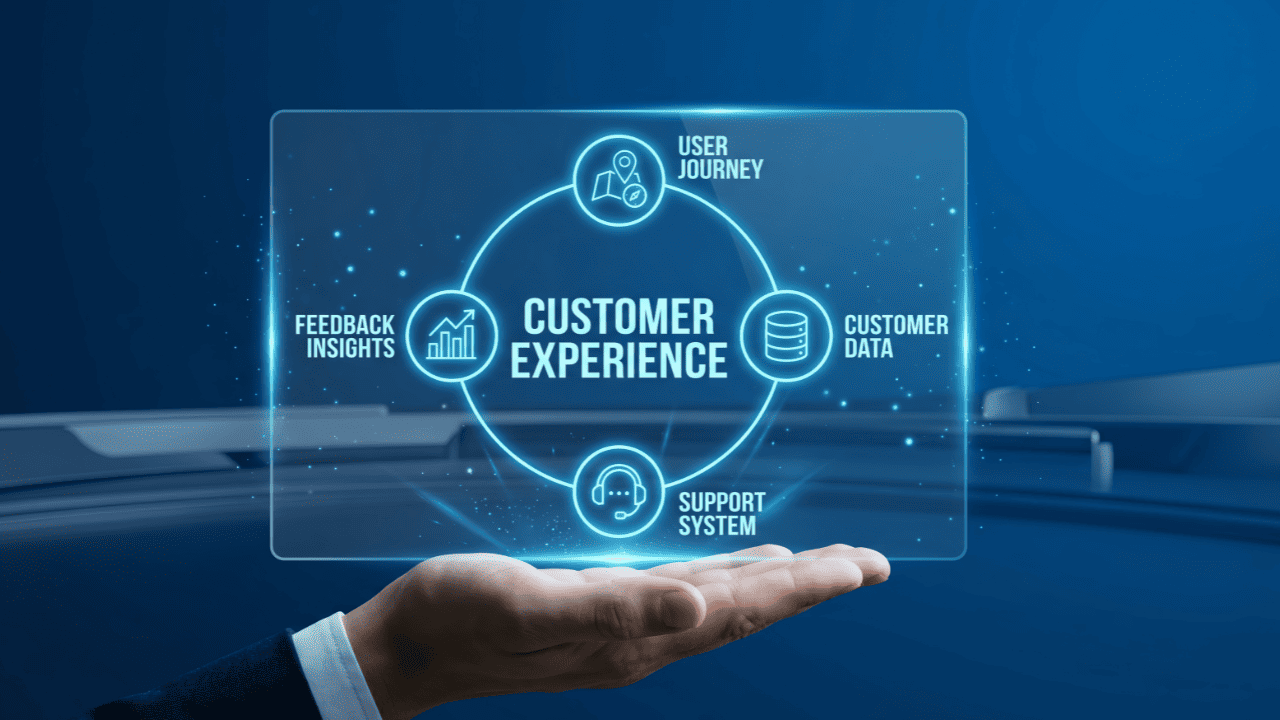
Experience management ranks among the hardest problems in business, and the difficulty has nothing to do with whether companies take it seriously. Most do and the evidence linking experience to growth is extensive and well-rehearsed.
The real problem is that the discipline has outgrown the frameworks most organisations still use to approach it, expanding from a single “customer experience” concern into something that now spans product, brand, and employee experience simultaneously, with each layer dependent on the others.
Leaders are consequently expected to synthesise more data from more sources than ever, act on it faster, and maintain enough structural coherence that a failure in one area doesn’t cascade across the rest. Experience management platforms exist precisely to make that possible, but only if you choose the right one for your organisation’s needs, which turns out to be a harder decision than most people anticipate.
What Should Teams Look for In Experience Management Platforms?
Experience management is a broad enough concept that it’s worth narrowing the scope before going further. The category encompasses dedicated employee experience tools, dedicated customer experience tools, and more holistic XM platforms that attempt to cover multiple pillars within a single solution — and this guide focuses primarily on the latter, with select CXM (Customer Experience Management) tools included where their feature sets extend meaningfully beyond the customer pillar alone.
To narrow it down, we focused on:
- Omnichannel consistency: The ability to collect and respond to feedback and data from multiple channels, including social media, voice, email, and surveys.
- AI that does real work: Integrated AI tools that can resolve issues, route conversations, surface patterns, or automate valuable tasks.
- Integrations: Quick, reliable connections to CRM tools, marketing solutions, employee systems (where relevant), and other essential software.
- Actionable analytics: Tools that provide AI-powered insights, sentiment analysis, predictive capabilities, and custom reports.
- Customisation: Platforms that adapt to different industry needs, like healthcare, retail, or finance requirements.
- Compliance and security: Role-based access controls, end-to-end encryption, flexible policies, and guardrails for AI.
- Actual product momentum: This category is moving quickly. AI agents, orchestration layers, and real-time analytics are becoming increasingly useful.
The Best Experience Management Platforms in 2026
These platforms share a category more than they share an origin. Some evolved out of support functions trying to process tickets more efficiently, others from survey tools attempting to diagnose customer churn, and others still from marketing and digital experience disciplines that only later worked their way into CX.
Most of the platforms covered here are still classified primarily as customer experience management solutions, which reflects where most brands actually place their priorities, but virtually all of them are beginning to acknowledge that delivering on CX demands a more expansive view of the business than the discipline has historically required.
Qualtrics XM: Best Overall XM Platform
Qualtrics XM really had to come at the top of this list because it’s one of the main platforms that looks at every angle of experience equally. You do get software for customer experience management, but also employee experience, as well as strategy development and research.
What’s great is how data-driven everything is. Most companies already have some way to collect feedback. Surveys, reviews, support conversations, and product data. The problem is connecting information and doing something useful with it fast enough.
That’s where Qualtrics keeps winning, by bringing data together and transforming it into something companies can use. It’s that approach that helped companies like Jollibee increase revenue by 15.2% on average, and even start anticipating customer needs in advance.
Recently, Qualtrics introduced “Experience Agents” across its suite of tools. They monitor responses in real-time, detect when something’s off, and trigger action immediately. That could mean routing an issue, escalating it, or resolving it before it becomes a bigger problem.
There’s also a push into synthetic data and faster research cycles, which matters more than it sounds. Traditional research takes time. By the time insights come back, the situation has already moved on. Qualtrics is trying to shorten that loop so teams can react faster.
Zendesk: Best for AI-Powered Customer Experience
Zendesk is still mostly associated with customer experience management, built for support teams, and it does that job well. Conversations come in, they get routed, resolved, and tracked, often with AI systems doing most of the work.
The AI agents in Zendesk don’t just suggest replies or summarise tickets; they often handle the full interaction from start to finish. Zendesk has said that automation rates are already pushing past 80% in some environments. There’s a lot happening in the background to make that possible. The Forethought acquisition, for instance, will enable the creation of agents that can really improve themselves over time. It’s going to be a very different approach to “train your bot and hope it works”.
Also, Zendesk might have a big presence in CXM, but it doesn’t ignore other experience elements, too. There are employee experience management systems to access as well, like AI-powered self-service tools. Plus, Zendesk recently acquired Unleash, accessing the systems they need to connect internal knowledge across systems to better support human employees.
Zendesk is still focused on service, but it’s pushing what that means further than most other platforms, moving further into true “XM platform” territory.
Salesforce Service Cloud: Best for CRM-Centric Experience Management
Salesforce keeps getting pulled into the “customer service platform” bucket, which is fair, but it misses the bigger point. Service Cloud matters because it sits so close to revenue, data, and operations.
When a company wants customer experience tied directly to CRM, sales history, case data, automation, and internal collaboration, Salesforce starts to look a lot more convincing than the simpler tools in this list.
The recent Agentforce push makes that even clearer. Salesforce didn’t just bolt an AI assistant onto Service Cloud and call it progress. It launched Agentforce Contact Center to pull AI agents, voice, CRM, and digital channels into one stack, then followed that with Agentforce 3, which adds a Command Center for visibility, stronger interoperability through Model Context Protocol support, and a bigger partner ecosystem through AgentExchange.
Like Zendesk, Salesforce also offers tools for employee experience, like the “Employee Workspace” and Employee Concierge. Plus, the countless analytical tools and AI-powered systems make it easier to track the impact of product and brand experience across the customer journey, too.
You don’t have full workforce management, QA, and journey orchestration within the Salesforce contact centre yet, but you can compose your own stack with Salesforce if you have the budget and the development resources.
That’s the tradeoff with Salesforce. It can do a lot, probably too much for some teams. Smaller companies can get buried under the setup, the customisation, and the cost. But for complex organisations that already live inside Salesforce, it’s one of the best experience management platforms around.
NiCE CXone: Best for Contact Centres
NiCE CXone is another platform that companies come to looking for ways to improve customer experience, and end up using for a lot more than they expected. CXone focuses mostly on conversational and agentic AI tools, but they’re not “just” focused on customer experience.
You’ve got AI agents that can handle engagement orchestration, empower teams with coaching and real-time support, and manage knowledge bases. Teams can access AI-powered quality assurance, interaction analytics, and copilots for both agents and supervisors. You even get systems that help you orchestrate human and AI teams so they can work more effectively together.
All of that blends in with NiCE’s tools for contact centre management on a broader scale. The performance claims from this system are strong, with deployments showing containment rates of over 80%, CSAT gains of 20% or more, and even a 10% efficiency lift on average.
Beyond that, NiCE excels at giving companies AI solutions they can actually trust. The Cognigy simulator, for instance, ensures that teams can test the bots they’re going to be using for everything from self-service to complaint handling, before they expose them to people. That’s valuable in an age where most companies are deploying AI, but few are deploying systems they can trust at scale.
HubSpot Service Hub: Best for SMBs and Scaling Teams
HubSpot spent years being underestimated in this category, and not entirely without justification. It was friendlier than Salesforce, well-suited to smaller teams, and strong on CRM alignment, but those weren’t the qualities that earned a place in serious conversations about enterprise experience management. That assessment no longer holds.
Service Hub has matured significantly, driven in large part by HubSpot’s belated but genuine recognition that customer service cannot function as a quiet afterthought to marketing and sales. The most consequential development is Breeze, which arrived in 2025 with more than 20 Agents and Assistants alongside Breeze Studio, and carried a more considered underlying logic than most AI product pushes: the tools are designed to operate inside existing workflows, with customer context already present rather than bolted on after the fact.
The design philosophy matters more for HubSpot than it would for most vendors, because simplicity has always been the platform’s core proposition. An AI layer that introduced complexity would have eroded the product’s appeal almost immediately. Instead, it has added credibility, and the results are beginning to reflect that. Breeze Customer Agent reached autonomous resolution rates of over 50% for customer conversations, a meaningful benchmark for a platform that much of the market still mentally files under entry-level software.
The practical evidence is also getting harder to dismiss. FitForMe, operating across seven European markets with a 60-agent support team, cut wrap-up time by more than 50%, reduced email resolution from 3.7 days to 2.1, and pushed inbound answer rates from 82% to 86% after integrating HubSpot with Aircall. HubSpot doesn’t match NICE in contact centre depth or Salesforce in enterprise orchestration, but it is no longer simply competing on ease of use.
Medallia: Best for Journey Intelligence and Insight
Medallia tends to be the choice for organisations that need to understand why customers repeatedly encounter the same friction points, and that has always been the platform’s core appeal: the ability to draw together feedback, digital behaviour, contact centre signals, and operational data into a coherent picture of the customer journey. What has changed over the past year is the ambition to make that intelligence actionable in the moment rather than something that surfaces in dashboards and gets reviewed quarterly.
The change is most visible in the Ada partnership, through which Medallia is feeding real customer and operational intelligence directly into agentic AI workflows, with the underlying premise that AI should resolve friction rather than simply document it. The same logic extends to employee experience, where staff survey data is converted into actionable tickets rather than sitting in reports. The Adobe partnership expansion points in a similar direction, connecting Medallia’s sentiment and experience data with Adobe’s AI agents to make the platform relevant to personalisation and journey orchestration, a meaningful move for a vendor that has sometimes been reduced to the “enterprise survey software” label, which has not been accurate for some time.
However, Medallia is not a service execution platform in the way that Zendesk or NICE are, and it was never designed to be. Organisations don’t buy it to run frontline support operations. They buy it to understand experience at scale, surface connections between signals that typically live in separate systems, and route the right actions into the platforms that handle customer-facing work directly.
Adobe Experience Manager: Best for Digital Experience and Personalisation
Adobe gets dismissed in experience management conversations because it doesn’t look like customer service software, and that framing causes people to misunderstand what it actually does.
Its role in the category is closest to content, digital journeys, personalisation, and site performance, which, for a significant number of brands, is precisely where the experience is won or lost. The website, the forms, the channel handoffs, the moments where a customer either continues or abandons, that is the version of CX Adobe is built to address.
On AI, Adobe is moving in the same direction as the rest of the market’s leading platforms. The Experience Platform Agent Orchestrator, introduced in 2025, brings a growing set of AI agents designed to work across customer journeys and workflows, while Experience Manager Sites Optimizer applies AI to identify opportunities to improve site experiences and content performance. Taken together, these additions show that Adobe is no longer just a publishing and personalisation stack, it is pushing into orchestration, experimentation, and real-time optimisation.
The platform’s limitations are just as clear as its strengths. Employee experience tooling is minimal, contact centre capabilities are essentially absent, and the stack itself carries genuine implementation complexity. Adobe is built for organisations with a mature digital experience strategy, serious content operations, and the internal capability to deploy it properly, and for those organisations, it belongs in the conversation.
Sprinklr: Best for Omnichannel and Social Experience Management
Sprinklr is most coherently understood as a customer and brand experience platform, though it has extended further into the operational layer than that framing suggests, with agent assist tools, copilots, a unified agent console, and a workforce engagement management system covering shift planning, quality management, and coaching.
The platform’s centre of gravity remains brand alignment and multichannel orchestration, and that is where it tends to be most compelling — for organisations managing and measuring experience across a significant number of channels simultaneously, the proposition becomes considerably stronger.
The 2025 product updates, announced at CXUnifiers, reinforced that direction, with new AI Agents and Copilot capabilities targeting service automation, proactive issue detection, and plain-language operational support. The customer evidence gives those claims more substance than a typical product launch would: Heineken Brazil reported handling 78% of cases without agent intervention, a 69% reduction in agent workload, and a 75% improvement in SLA times across social, messaging, email, and voice; Utility Warehouse achieved a 48% increase in first-contact resolution with 99.19% of tickets resolved on the first attempt and a 33% rise in five-star reviews; and Uber attributed a 33% reduction in first response time to Sprinklr while scaling its social care operation.
The tradeoff is that Sprinklr remains an enterprise platform with the complexity that entails. Smaller teams can find themselves overwhelmed by it, and mid-market organisations frequently end up paying for considerably more system than their actual requirements justify.
Choosing the Best Experience Management Platform
The interesting thing about this market is that every vendor is drifting toward the same promise, be it better context, faster action, or more AI. They’re just getting there from very different starting points.
In general, the best experience management software isn’t the one with the fanciest AI or the biggest feature list, but the one that offers the best possible way to improve the experience your business is currently struggling with.
Get that right, and the results will come naturally. Get it wrong, and you’ll end up paying for another piece of software that never truly delivers.