January 21, 2026
Vinod Muthukrishnan, Webex’s Customer Experience Guru, Talks Up Concierge AI Agents
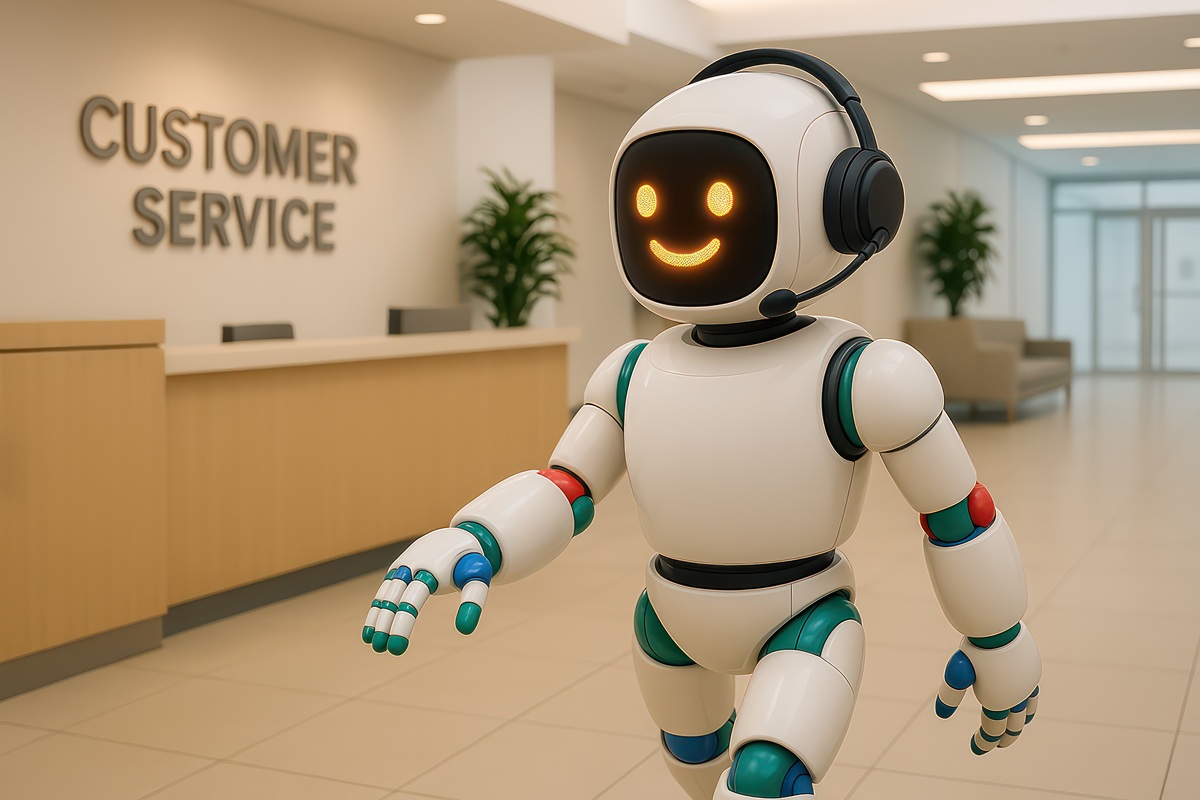
Webex by Cisco remains a popular collaboration and unified communications platform. Which makes it a front door for customer support AI, and agents-for-all-workers, rather than the specialist models powering CX, EX, ERP and other platforms.

Taking a look inside the world of agents, Vinod Muthukrishnan, VP & GM of Webex Customer Experience at Cisco looks at the current and future intelligence that will power businesses, small and large.
Within Webex, there are already plenty of agents already running within AI Agent Studio.
Cisco’s Agents provide advanced virtual assistant 24/7 self-service for customers, handling queries in voice and digital channels. And they complete office tasks with backend system integrations, with human help on hand when needed.
But as AI gets smarter, and tools like Cognigy’s new AI Simulator perform intensive fit-for-purpose testing, the need for people power could soon drop off.
The rise of intelligent, human-like concierge AI agents is transforming customer engagement
By the end of 2026, the rapid evolution of AI multi-agent collaboration and orchestration, powered by advancements in agent to agent (A2A), Model Context Protocol (MCP), and customer journey data, will enable new levels of automation and the creation of brand concierge AI agents.
These agents will remember, understand and action every interaction, across the entire customer journey, providing more accurate and better effectiveness to resolve issues.
We expect significant innovation in this area, with concierge agents increasingly using domain specific small language models (SLMs) to become sophisticated, agentic agents tailored to brand and customer needs, and delivering complex, multi-agent collaboration – human and AI.
With faster access to backend systems and seamless orchestration that will fundamentally change how organizations manage their agent workforce. These agents will become part of the workforce, elevating engagement.
CX platforms will speak a common language and enable true interoperability
We’re moving toward a world where customer experience systems will need to work together to address the technical complexities.
Thanks to new standards and protocols, different tools and platforms will be able to share information and work together smoothly, no matter who built them or who operates them.
The future of an open ecosystem with deeper integrations will embed customer experience directly into core business workflows, breaking down silos by connecting data across systems.
Innovations like A2A and MCP will define the next generation of integrations, enabling quicker workflows and faster resolutions. This makes it easier to create seamless experiences for customers, break down silos, and quickly adapt as expectations or regulations change.
Human agents will evolve into strategic problem-solvers and brand ambassadors
As AI takes care of more routine questions and tasks, the role of the human agent will change in a big way through 2026.
Agents will become specialists who step in for tough situations like thinking through complicated, sensitive problems, or conversations that call for a human touch, and who transition from just managing inbound queries to being proactive and nurturing customer relationships.
This shift means AI will become more prevalent in augmenting agents’ work and processes as they will need new skills and better support to handle these challenges, but it also makes the job more interesting and rewarding.
Plus, with smarter AI-powered tools for managing quality and schedules, agents and supervisors can get real-time feedback and coaching, helping everyone improve and grow on the job.
Security by design becomes table stakes in a global AI world
With privacy rules and data protection laws changing all the time, brands will have to get even better at keeping customer information safe, no matter where or how they’re using AI.
In 2026 and beyond, “security by design” won’t be optional; it’ll be expected.
Companies will need to give customers and regulators clear choices about where data is stored and how it’s used.
They’ll also have to make sure that every step of a customer’s journey, especially when switching between different systems or AI tools, is secure, has tools for observability and monitoring, and is fully auditable.
Staying on top of compliance won’t just build trust; it’ll be necessary to keep doing business in a global, AI-first market.
AI will become the new front door to customer experience through tools like Webex
Soon, it won’t be unusual for customers to start their engagement and search for help with a brand using AI-powered assistants, instead of going straight to a company’s website, app or calling directly.
Consumer and enterprise environments are converging, as demonstrated by recent ChatGPT developments, and people will expect these AI tools to answer questions, solve problems, and even connect them directly with a company’s support team if needed – all while maintaining full context throughout the interaction.
For brands, this redefines customer engagement and understanding how AI agents become the interface to their agents and systems means it’s time to make sure their information and processes are ready to work with these third-party AIs.
It also means thinking about how to keep customer data safe and make sure the brand’s voice comes through clearly, even if the first interaction happens outside their own channels.
Whatever the business need, Webex and other platforms will soon have the full gamut of AI agents and agentic tools to support all types of work and business.