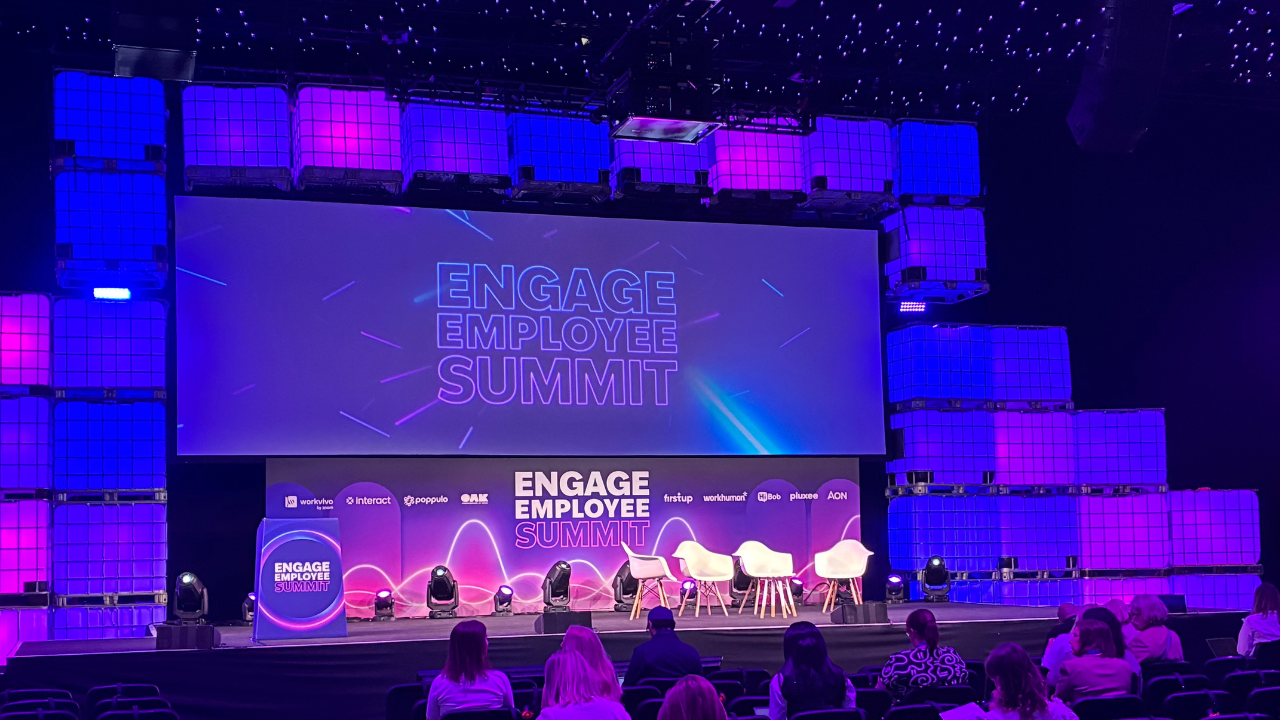
When participation in Visa’s employee volunteering programme was low, the instinct — as it so often is in internal communications — was to send better messages. Katie Klimaytys, Director of Global Internal Communications at Visa, decided to challenge that instinct entirely. Her session at Engage Employee Summit 2026 made the case that low volunteering uptake is not always about poor communication or a lack of employee motivation. Often, there’s a design flaw that prevents people from getting involved.
Diagnosing the Real Problem
Visa’s volunteering programme had an image problem. Klimaytys highlighted how participating meant a full day out of the office, clunky admin, and hours that had to be logged manually — a significant ask for already time-strapped employees. Rather than investing in more persuasive communications, Klimaytys and her team mapped the real-life constraints employees were working with, identified the blockers, and redesigned the experience around them.
The result: one-hour in-office sessions, one click to register, no forms, and volunteering hours captured automatically.
Giving People What They Actually Wanted
Removing friction was only half the work, Klimaytys noted. The other half was making the programme worth showing up for. To achieve this, Visa took a data-led approach and listened to what employees actually wanted from a volunteering experience. They found that their people wanted more career development, connection with leaders, and a sense of genuine purpose. So they built for that: career access workshops, virtual sessions, recording audiobooks for children in hospital, and skateboard-making sessions in offices across the globe, with the finished boards going to foster children locally. Over 500 people attended those workshops.
“People will meet the moment if you meet them where they are — they don’t need convincing, they need fewer obstacles.”
The Results
Participation went from 18% to 51% in just two weeks, against a target of 31%, with 100% of participants saying they would volunteer again. But perhaps the most telling outcome wasn’t a statistic. Leaders across Visa began organically using their own offsites as volunteering sessions – opening them up not just to their direct teams, but to colleagues across their offices. This activity was discretionary; the leaders weren’t asked or mandated to do so. It was a clear sign that volunteering had become a cultural movement, provoked by a human-led redesign.
Key takeaways
Klimaytys was clear that this was an employee experience design story, not a communications one. Before reaching for a new campaign, she argued, ask a different question: what’s actually stopping people? The answer is usually structural. For example, the blocker could be an unnecessarily long form, a clunky process, an unrealistic time commitment, an unclear benefit – or a combination of these.
“Our responsibility is to advocate for people in the right way, backed up with data,” she said. “Knowing your audience changes everything. People will meet the moment if you meet them where they are — they don’t need convincing, they need fewer obstacles.”
This session was one of several standout moments from Engage Employee Summit 2026 — read our full event takeaway for more insights from across the two days.