
May 22, 2026
Your Employee Experience Roundup: What 3,000 EX Practitioners Were Talking About, Plus AI Predictions from Gartner and Microsoft’s AI Chief
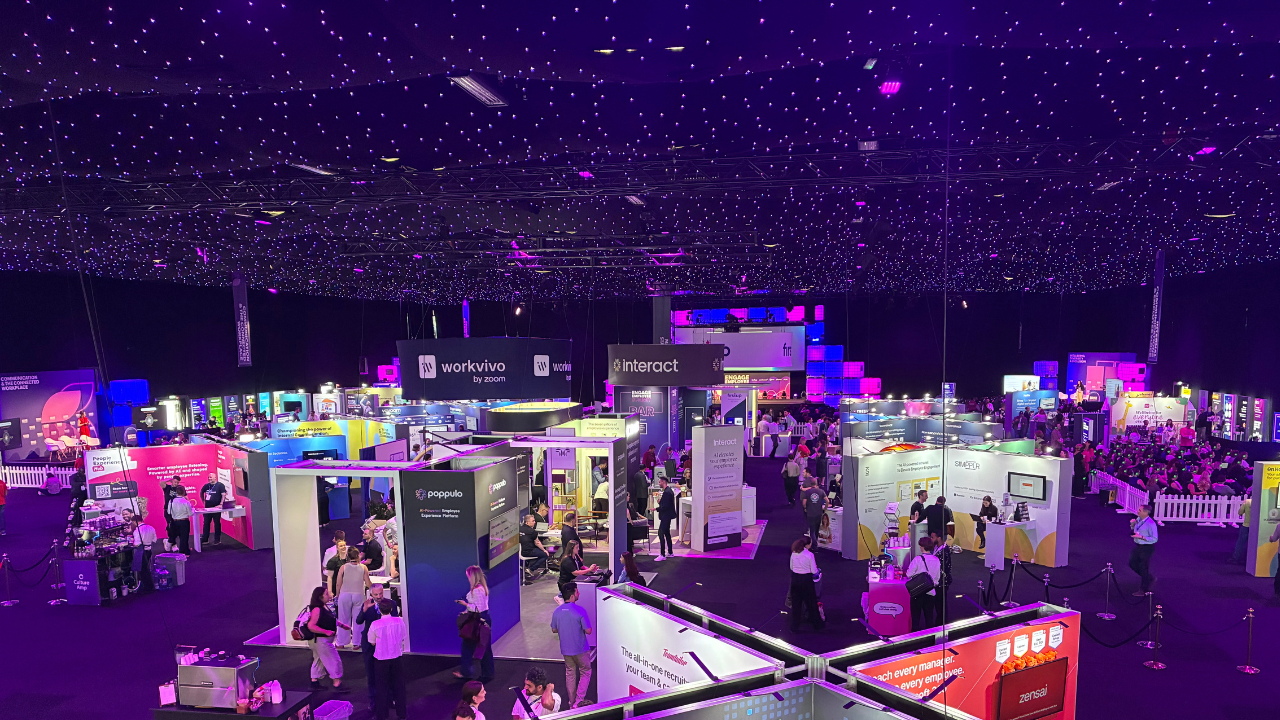
This week, more bold predictions about AI and the future of work – this time from Gartner and Microsoft AI Chief, Mustafa Suleyman. Meanwhile, 3,000 EX practitioners gathered in London and talked more about human themes than tech trends, which was a welcome surprise.
Engage Employee Summit 2026: What the Room Was Really Talking About
More than 3,000 practitioners came together at Evolution London on 20–21 May. AI was present in the agenda, but it wasn’t the focal point, which was a refreshing change. Themes coming up both on stage and across the floor included: listening to the workers who are the hardest to reach, removing friction in the employee experience, and the EX–CX connection as a commercial argument, not just a people one.
The most striking example came from Erste Bank Poland, where Chief Employee Experience Officer Lukas Pelikša described a Total Experience model that gives equal weight to employee and customer experience. It’s an approach that sits deliberately outside HR, and has produced an eNPS five times higher than the banking sector average – with a direct, proven correlation to customer NPS.
The full themes and standout moments from the two days are covered in a separate piece. Read the Engage Employee Summit 2026 takeaways here.
Mustafa Suleyman Says White-Collar Work Will Be Fully Automated Within 18 Months
Mustafa Suleyman, chief executive of Microsoft AI, has said that most white-collar work would be fully automated within 12 to 18 months.
The claim has some surface-level data behind it: AI-related layoffs now account for roughly 26% of planned job cuts in 2026 so far.
But the reality is more complicated. An MIT study, for example, found that 95% of corporate AI initiatives have seen zero measurable impact on profits. And while tech leaders like Suleyman bang the drum of mass white-collar displacement, other analysts predict back-pedalling. Forrester, for example, expects half of AI-attributed layoffs to be reversed in 2027, with jobs returning offshore or at lower wages.
Gartner: AI Will Create More Jobs Than It Eliminates – But Millions of Careers Will Break First
Another AI prediction, this time from Gartner’s HR practice. This week, the global research and advisory firm published research estimating that from 2028, AI will be a net creator of jobs.
The path there, however, will disrupt millions of careers, and organisations are not building the talent pipelines to manage that transition. The specific risk Gartner identifies is that AI is enabling employees to hit their current performance targets without developing the deeper expertise needed for more complex roles. High performance today is no longer a reliable signal of readiness for tomorrow.
The AI Backlash Is No Longer Quiet
Employee discontent about AI is moving from quiet rumblings to labour activism. This is happening across tech companies – Meta, Google DeepMind and Amazon – and beyond.
Commenting on this development, Global HR analyst Josh Bersin flags that employee trust is at its lowest since the pandemic, and organisations are misreading their own position. “Given that we want more productivity out of the people we have, EX is actually more important than ever.”
Read the full CXM insight here
Gallup finds job market optimism is rising in Europe – but engagement is still falling.
In Europe, job market optimism has reached a historic high of 57%, with the biggest regional gain since 2011, according to Gallup. Yet the same data finds European engagement levels to be the lowest of any region globally, at 12%.
The picture in the US is the inverse. Only 46% of American workers say now is a good time to change jobs — a figure that has barely shifted since 2011 — yet 32% are engaged. American workers remain engaged despite a labour market that offers little sense of stability.
HR and Culture Transformation Leader Zhanna Zhuravleva attributes this to something more cultural than economic. “In America, work is more tightly bound up with identity and self-worth in a way that simply isn’t true in most of Europe, where a job is more often just a job.”
What’s Moving in the EX Market
Workvivo by Zoom has spun out its Employee Insights capability into a standalone people intelligence platform – Seer. The headline from their accompanying global survey: 62% of employees are comfortable giving feedback, but only 39% of frontline workers say they see meaningful change as a result. Justin Black, former head of Glint at LinkedIn and Microsoft, has been brought in to lead it. The framing around execution gaps, not listening gap, is becoming the dominant narrative across the category.
UK-based, B Corp-certified survey platform People Experience Hub (PxHub) has added a significant AI layer to its platform: PxVoice (NLP-powered free-text analysis), Drivers’ Analysis (predictive analytics identifying the questions most influencing engagement), and Action Planning 3.0 (AI-suggested, editable action plans built from survey insights). This notable move from the UK challenger was announced at the Engage Employee Summit, this week.
London AI experience agency Tangent has agreed terms to join Exadel, a global AI and digital engineering firm backed by Sun Capital Partners. CEO Leigh Gammons stays on. Together they’ll launch a joint AI accelerator for enterprise clients. Client relationships include SAP, Vodafone, and IWG. This move signals that the AI delivery gap – the space between strategy and working product – is now commercially significant enough to drive consolidation.
Get in touch
That’s it for this week. I’ll be back next Friday, and if you have employee experience stories to share, connect with me on LinkedIn or drop me a line at [email protected]

Becky Norman is the Employee Experience Editor for CXM. With 14 years in digital publishing, she champions the organisations and practitioners creating exceptional experiences for their people — and driving measurable impact on customer success as a result. Prior to this role, Becky spent eight years as editor of B2B publications HRZone and TrainingZone, covering the most pressing issues facing HR, people, and learning leaders. In 2020, she co-created Culture Pioneers – a global campaign recognising the organisations shaping workplace culture to drive both business performance and employee experience.