December 02, 2025
How CX Turned Agri Giant Syngenta’s SAP Rollout Into A Game-Changer
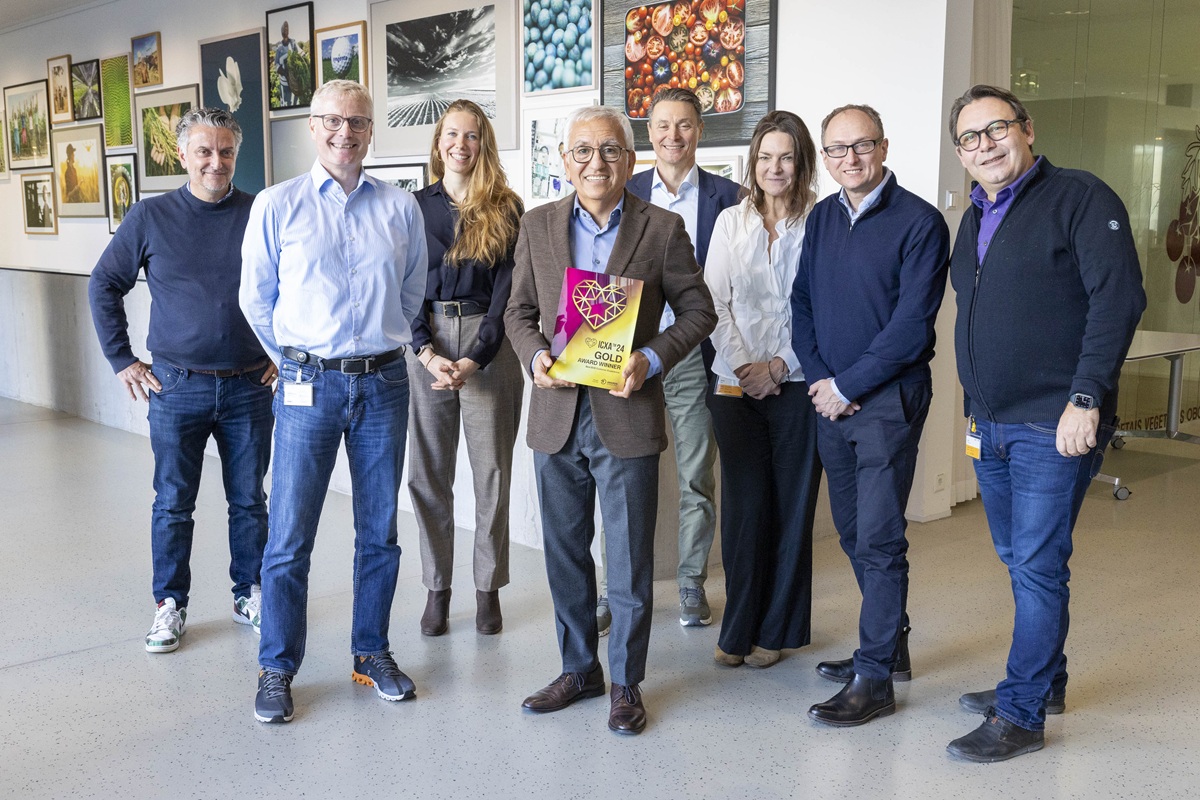
International AgriTech company Syngenta, along with CX partners Lexden, were Awards International’s 2024 Gold winner for Best B2B programme at the International Customer Experience Awards.
The award recognised their effective integration of customer centricity across the global business, which has been celebrated throughout the organisation.
Farmers everywhere have little in common. Their businesses are defined by their environment and the crops they can grow. From the weather to the soil and the politics in between, local market characteristics are everything.
Syngenta’s global crop protection business has evolved along similar lines. Catering to diverse country requirements, it developed strong local market identities wherever it operates.
With operating models serviced through supply chain relationships with distributing, retailers and growers (customers). While local market expertise is essential to drive growth, it can present headaches when you’re upgrading SAP installations across 80 different countries.
“When supporting local teams, with different go to market agendas, different customers and cultures, it can take time to build trust and credibility” explained Jorge Lopez, group transformation head and S/4 Hana global programme director, Syngenta, told Customer Experience Magazine.
Making the Most of an SAP Migration
With an impending SAP driven requirements to move to a new S4/ Hana platform, Jorge Lopez was appointed to take charge of the SAP project. He was asked to always consider the customer because they would be impacted.
In addition, in recognition of typical stealth driven IT migrations, was a request to bring everyone with him, Jorge took the opportunity to prioritise the customer and employee experience through customer feedback and operational performance data to open doors and facilitate needed engagement in Syngenta’s country offices.
There were also solid business reasons to leverage CX. Agritech is subject to shifting competitive pressures.
“It was clear, making it easier for our customers to do business with us made sense. Customers value the quality and availability of our products, from a company with a strong reputation for efficacy. We needed to match this with the experience the customers have. We want them to choose us as because we are the easiest to do business with as well” explains Jorge Lopez.
The “Ease of Doing Business” (EoDB) programme commenced in 2020 to update and improve customer experience outcomes for distributor customers, the systems underpinning them, the internal ways of working across each country, and ultimately drive productivity, in preparation for a migration to the S/4 Hana rollout.
A ‘One Team, One Plan’ Approach
To lead the 10-year project Jorge Lopez put together a specialist team with expertise in process mining, customer centricity and commercial operations. A ‘one team, one plan’ approach pulled together company experts. With an emphasis on developing internal capability, trusted partners CX specialists from Lexden Group and Accenture joined the team to provide additional support.
From the outset, the leadership team embraced the individual country markets as valued customers. “From the beginning, we engaged and listened to our employees in every country.
We wanted to understand what the challenges would be and how we could support them” said Guillaume Manchelle, global head of customer operations and customer centricity, Syngenta. “We recognised we needed to be role models if we wanted them to become customer centric led. We’re practising what we preached,” he added.
Instilling Local Ownership Through New Customer-Centric Capabilities
Being customer focussed has always been a core value of Syngenta, embedding this across all areas of the business in a consistent, cohesive, and commercially advantageous way was seen as the challenge. The idea with EoDB was not just to put customer experience at the heart of the firm, but to create cross-functional ways of working, where each department share accountability for the experience of customers.
The global customer centricity leadership team “developed a methodology that fit every country, because it allows [ed] the country to be a part of the review and prioritise their own improvements to the customer experience,” highlighted Jorge Lopez.
“To make this sustainable it needs to be cross-functional, and it needs to be led by the countries, with global support as needed,” he added.
The customer centric approach facilitated conversations in local markets that might otherwise not have happened if it was merely an IT project. By opening with customer’s operational experience, fresh customer insights were surfaced which became the focus for system changes ahead of the upgrade to S/4 Hana. The leadership team aimed, with the support of the countries, to close the loop between the strategy and final execution.
“With many countries, we are working on customer experience and productivity improvements. The gains from this way of working have impressed the countries, which increases trust in customer centricity” pointed out Guillaume Machelle, “And enables us to continue working with them on the system migration,” he added.
Fixing Over 1,000 Pain Points
By the start of 2025, Syngenta had completed phase one of the work — identifying CX processes and pain points — in 45 out of 80 global markets.
The agritech enterprise had started the consolidation of SAP platform toward final migration to S/4 HANA. 20 countries were migrated to the current global platform to reduce number of existing SAP instances. With a final phase planned for remaining countries, due to end by 2030.
So far, process improvement has closed over 1,000 pain points and created opportunities “by delivering new capabilities, process and system changes,” explained Guillaume Manchelle.
By involving the local teams at the earliest stages of the project, the global team gained support to collaborate with key functions such as HR, Finance, Supply Operations and Commercial. Each country has followed a five-step ‘sprint’ model.
The process begins by bringing together local stakeholders and developing a customer-centric approach. It then focuses on discovering operational pain points, untapped opportunities and system design.
Measure Impact and Positive Feedback
Local ownership and execution unleashed a powerful feedback loop across the organisation. In Romania for example, the global team listened back to customer interviews, and it was evident that taking time to listen to a client’s situation was paying off.
“That helped us appreciate that while Syngenta is recognised for product quality and availability [of crop protection], there was a massive opportunity to create differentiation with CX too,” Christopher Brooks, global customer experience specialist, Lexden Group, told CXM.
Feedback is also being used as a tool to improve customer relations. The Argentinian office organised a large forum with its customers, where it showcased operational improvements, it was making to the customer experience, based on their input.
The local team fashioned a moment where it celebrated CX. “They took time to create an event to applaud their customers, thanking them for their feedback that had led to these improvements,” said Christopher. “It was really powerful!!”
As EoDB has gained global momentum the positive feedback became “globally. The demand was fantastic”, said Jorge Lopez.
The programme also unleashed a groundswell of ideas to improve CX. The EoDB team has created a best practice repository that is shared across different countries. “There is a mindset to share everything in the spirit of progress,” said Christopher Brooks.
The leadership team has successfully “brought everyone to the table with the customer in the middle,” he added.
Driving The Employee Experience
In parallel to the customer centric appetite sweeping Syngenta, is a quieter employee experience element, which is vital for sustaining the customer-centric change. Throughout the operation, the global customer centric team led by Guillaume Manchelle, has been educating and developing capability in employees to deliver what is important for the customer.
In the UK office, the HR head has taken it a step further. “He has taken the entire employee journey and identified where improvements could be made to the experience, to make customers more central to what they do, including the recruitment journey” explained Christopher Brooks.
In Argentina, they’ve created a Customer-Centric Academy that has trained 30 staff members so far to have shared responsibility for customer centricity. So, if somebody is promoted into another role, there is a succession plan for customer centricity to continue to deliver a consistent customer approach.
“We didn’t just want one person with a continuous improvement mindset, so we created the academy. The satisfaction of this initiative is 95% from participants,” said Jorge Lopez. The academy concept is now being shared with other Syngenta offices.
Although the CX work has been primarily focused on the crop protection part of the corporation, benefits are being realised elsewhere in Syngenta. The team has been sharing its experiences with the organisation’s seed business, with new ventures and other functions, such as procurement.