
December 05, 2025
2026 Predictions: The Year AI Turns Nasty and Makes Us Lazy?
2025 goes out with an increasingly nasty smell around AI. First, there’s the ongoing risk of a bubble and crash among the major providers.
And, this week, memory manufacturer Micron announced the closure of its popular, if niche, consumer/performance provider Crucial, abandoning the space to sell more SSD and high-bandwidth RAM products to the AI market at a more-agreeable margin.
That’s just one hint at how the growth of AI could impact other markets. While there’s unlikely to be a crippling RAM shortage for 2026’s AI-powered office laptops or smartphones, prices will likely rise. Possibly through booming demand or politically-motivated shortages as lagging organisations, countries even, try to catch up.
That’s as more RAM makers flock to meet the incessant demand for mega-data centres (powered by the likes of Amazon’s new Graviton5 chips) and other facilities. But all it will take is a couple of disrupting incidents (the death of search?), and AI becomes even more of a political hot potato.
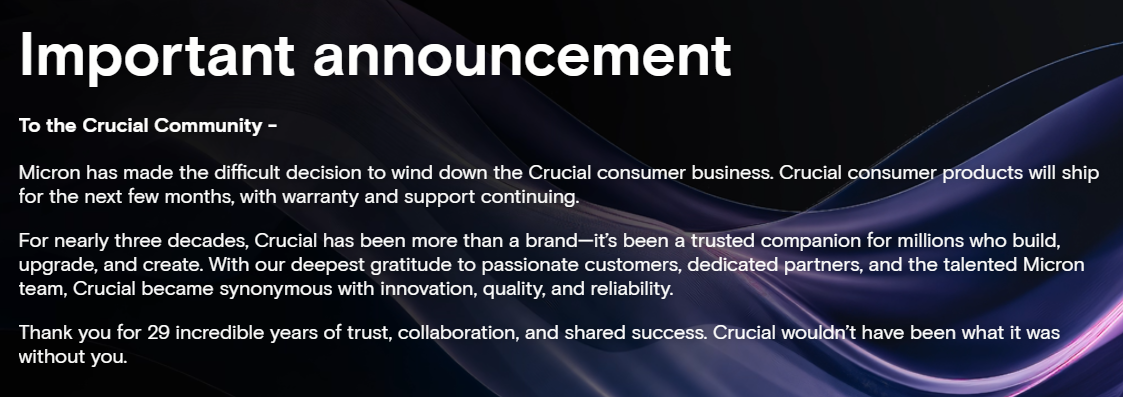
What businesses, services and who else could get shut down in the rush to AI utopia?
The Pricing Fallout and Rises of AI
These rising costs will also likely impact SaaS providers, across the customer experience management market and beyond. That’s as the cost of hosting, managing and growing bandwidth demands of AI tools rises.
Also, as more businesses use AI services for operational tasks and functions, expect the bills to rise further as providers move to per-usage models and bump their prices.
Organisations’ spending on AI-native applications rose by 75.2% year-over-year according to a Zylo 2025 report. Yes, other costs will come down, but AI won’t be the cash-saving option many businesses were hoping for.
While external costs will challenge all end-user organisations, how they manage AI as an internal cost is a critical part of broader development.
A fresh report from Futurum, “Chaos to Clarity: The FinOps Imperative for Data, Analytics, and AI” notes that AI workloads are projected to contribute nearly $20 trillion to the global economy by 2030, but strong management across visbility, optimisation and automation is key to any success.
The Strategic Value of AI in 2026
Looking through a more strategic business lens, Gartner, naturally has plenty to say. Worst is that AI-driven decision automation risks catastrophic loss of life, possibly in the thousands.
Gartner’s analysts also predict that through 2026, including the risk of atrophy of critical-thinking skills, due to GenAI use. That will push 50% of global organizations to require “AI-free” skills assessments.
At the sharp end, Harris Beber, Chief Marketing Officer at monday.com, backs Gartner’s ideas up, predicting that 2026 will punish marketers who confuse speed with progress at a time when innovation is moving faster than adoption.
Harris argues that as AI floods feeds with low-quality “AI slop” and gives everyone access to the same tools, the real differentiator won’t be output, it’ll be resonance.
“To that end, the best marketing will be measured in resonance. People are tired of friction, gimmicks and ‘clickbait’ they’ll gravitate towards products and experiences that feel effortless, personal and actually deliver on their promise. Right now, we’re seeing users putting up with friction and poor user experiences to get access to the latest innovations.
“But that grace period is expiring. In 2026, success will be defined by usage, engagement, and enjoyment, and companies will need to move from innovation theatre to delivering experiences that not only deliver measurable value, but in ways people genuinely love to use.”
People Power Will Beat AI in Many CX Use Cases
AI cannot outperform people in many functions, especially creative and thinking tasks where logical/illogical leaps solve problems. As Tom Smith, CEO of GWI notes, when it comes to growing use of synthetic data, “Customer experience in 2026 will deteriorate rapidly if we don’t get a grip on the insights shaping it.”
He continues, “Since the advent of AI, many CX leaders and marketers have turned to synthetic data and audiences to help shape strategy and customer journeys. But there’s a flaw in this approach: those insights work well for an AI agent, not necessarily for your customers.
“AI is not human and it can’t replicate the way we think. It’s looking for patterns to help it predict what the next output should be. If those patterns aren’t grounded in real, human centric data, your strategy won’t reflect the customer experience people actually want.
“In 2026, the key to overcoming this challenge is choosing AI tools that are trained on representative, human data. Only then can you achieve the cultural nuance and emotional depth that results in a winning CX strategy.”
Marketing and AI Could be 2026’s Match Made In Heaven
Marketing will be a huge and fertile opportunity for AI, as long as it doesn’t fail the humanity or empathy test. Katie Costanzo, President of Customer Experience at CSG, reckons 2026 will be the “Know Me” year as we see the true ROI of hyper-personalization.
She says, “In many ways, what customers want is simple. They want an easy experience that is consistent from end to end. But for brands to make experiences truly easy, they need to understand the customer like never before. In 2026, the most successful brands will leave retroactive measurement like CSAT behind and invest in real-time, even predictive, analytics. They will battle data silos to gain a unified view of the customer, then use tightly scoped agents and automations to craft a fluid, adaptive customer experience that feels truly personal.”
Personalisation and Digital Faces Need Warmth
All that comes with a word of warning, “AI-powered personalization at scale will fall short if it doesn’t sound and feel human. A truly hyper-personalised experience requires investments in tech, skills and people in equal parts.”
Katie also reckons that “AI will redefine the digital face of the brand as they realise that AI is not a technology but an extension of the brand. The work should begin today to define AI agent guidelines for digital tone of voice, ethical guardrails, values training and customer experience standards– just like they do for staff.”
“As AI interactions become harder to discern, every interaction a customer has with the technology is a reflection on the brand. If the AI is cold, confusing or self-serving, so is the company it represents. In 2026, innovative brands will ensure their AI agents act with the same care, clarity and empathy they’d expect from an employee.”
Andrew Witts, Digital Marketing Expert at Studio 36 Digital, recognises that “By 2026, advertisers may only need to provide a product image or a short brief and a budget, which the AI could use to generate visuals, video, copy, targeting, and even recommend budget allocation. While the technology offers major efficiency gains, it also raises questions about creative control, oversight, and how much decision-making should be entrusted to automation.
Looking ahead, AI will be able to deliver real-time personalisation and context-specific variations, tailoring ads to user behaviour, interests, or location. Each person may see a slightly different version of an ad, increasing relevance but also requiring strong brand guardrails.”
AI Changing the Travel Customer Experience in 2026
Beyond the glossy new airport terminals, travel sits at the cutting edge of AI and, according to Vyas Sekar, Chief Scientist at Conviva, in 2026, agentic AI travel experiences will redefine how consumers plan and book journeys
“In 2026, one of the most stressful consumer experiences – travel planning – will transform. The days of juggling multiple browser tabs to compare flights, hotels, and itineraries will give way to agentic AI systems that manage the entire journey on the consumer’s behalf.”
“These intelligent travel agents won’t just respond to prompts, but will anticipate needs, understand preferences and budgets, and autonomously co-ordinate every element of a trip.”
“The airline industry will sit at the centre of this change. Strong customer loyalty programs, reinforced by frequent flyer schemes and brand familiarity, will allow airlines to experiment with agents early. However, consumer patience will be finite. Early adopters may benefit from travellers’ willingness to tolerate small glitches or manual interventions, but customers will soon abandon unreliable agents in favour of companies that deliver seamless performance.
“For travel brands, this marks a pivotal shift. Those that use agentic AI to deliver reliable, outcome-driven experiences will be the ones who succeed. To do so, systems must focus on resolving needs, not multiplying choices. Travellers don’t want more options – they want certainty that every element of their journey works together, seamlessly and intelligently. As these tools mature, convenience and confidence will define the next era of travel competition, not price.”
These are just a few of the many AI predictions we’ve noticed or were bombarded with. We look forward to seeing which fly and which fail to take off, and are happy to talk about any others that splat across the news and our in-trays.