April 24, 2026
SoundHound AI to Acquire LivePerson to Unify Voice and Digital Customer Engagement
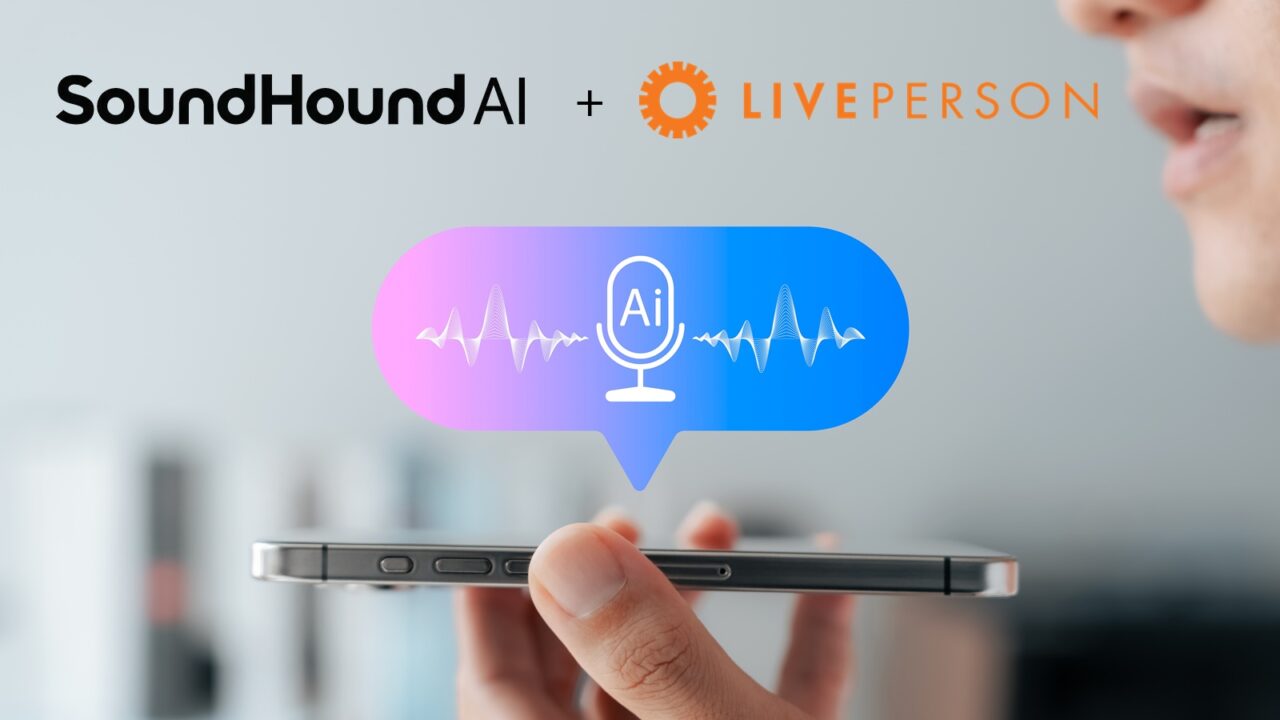
SoundHound AI has agreed to acquire LivePerson, the enterprise conversational AI company, in a deal that will combine the companies’ voice and digital AI capabilities into a single omnichannel platform.
The transaction unites SoundHound’s proprietary voice and agentic AI technology with LivePerson’s Conversational Cloud, a digital messaging and orchestration engine with embedded integrations across web, mobile, and social channels. The combined entity will serve enterprise customers across more than 30 countries. SoundHound says the existing customer base alone represents a $500 million revenue opportunity.
Keeping Conversations Coherent
Voice and digital customer service have lived on entirely separate technology stacks for years, forcing CX teams to manage multiple specialised vendors just to keep conversations coherent across channels.
LivePerson CEO John Sabino said consumers increasingly expect to begin a complex request over the phone and finish it via text or web messaging without repeating themselves or losing context, and that orchestrating a strategy across both voice and digital has historically meant juggling separate providers for each. The acquisition removes that friction by bringing SoundHound’s voice AI and LivePerson’s digital messaging together under one platform, giving enterprises a single provider for the full conversation lifecycle.
The deal is a fifth strategic acquisition for SoundHound, following its integrations of Amelia, Interactions, and others, a pattern of disciplined capability-building that has assembled over 120 years of combined customer relationships and enterprise integrations.
LivePerson adds hundreds of long-tenured enterprise accounts, many spanning more than a decade, to a SoundHound customer base that already includes thousands of restaurants, global automakers, and enterprise clients across financial services, healthcare, insurance, energy, and retail.
Voice Meets Digital, and the Data that Follows
SoundHound plans to offer its voice AI capabilities directly to LivePerson’s digital-first customer base, which the company says has been one of the most frequently requested additions from LivePerson clients. In the other direction, SoundHound’s enterprise customers will gain access to LivePerson’s proven digital orchestration, creating a unified omnichannel solution that neither company could deliver independently.
From an AI performance standpoint, SoundHound processes billions of voice interactions annually, and LivePerson handles one billion digital messages per month; the combined dataset of tens of billions of customer interactions per year will feed model training across both modalities and strengthen enterprise-grade automation outcomes. SoundHound has already demonstrated how this kind of multi-agent orchestration works in practice with its enterprise platform, which coordinates AI agents across voice, SMS, webchat, email, and social channels for hundreds of large-scale organisations.
Consolidation as the Competitive Play
The enterprise CX technology landscape is rapidly consolidating around platforms that can handle the full customer conversation lifecycle rather than individual slices of it. Enterprises have spent years assembling patchwork stacks of chatbot, IVR, messaging, and contact centre tools from different providers, and the integration cost and data fragmentation that results have become a competitive liability rather than a manageable inconvenience.
SoundHound CEO Keyvan Mohajer characterised the acquisition as a way for businesses to replace fragmented legacy technologies with a multimodal experience designed for an AI-driven era, adding that combined customers will see immediate value through expanded capabilities and enhanced scale. The company also expects the deal to accelerate its path to profitability, citing a strong balance sheet, no debt, and the operational efficiencies that come with running voice and digital AI on a single platform rather than maintaining parallel infrastructures.